
This newsletter includes:
- October update on the dunes
- Volunteering has wrapped up for the year
- Transformation of Dune #3
- Celebrating Halloween at the dunes
Working Under the Fall Leaves To Get Things Shipshape
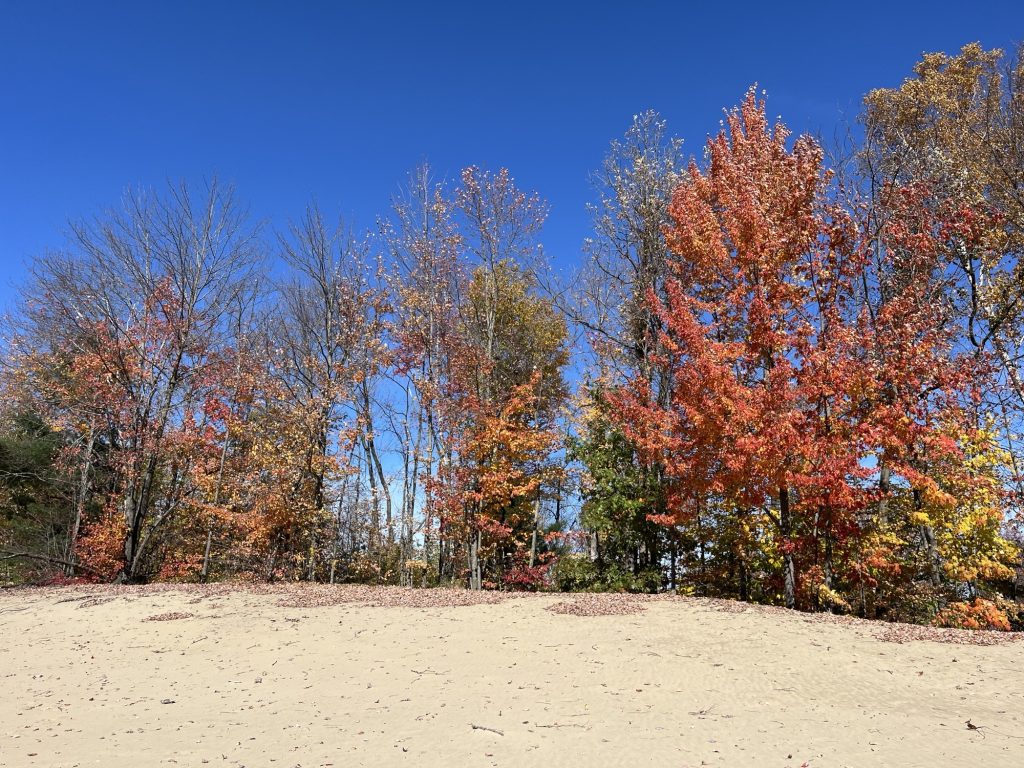
We slowed our pace of work at the Pinhey Sand Dunes in October and formally wrapped up volunteering on October 25. But with some warm sun and the autumnal oranges and reds of the surrounding forest, it was still wonderful through much of the month. So much so that the National Capital Commission (NCC) pointed to Trail 31 around the Pinhey Forest, and our dunes, as a top place to see fall colours.
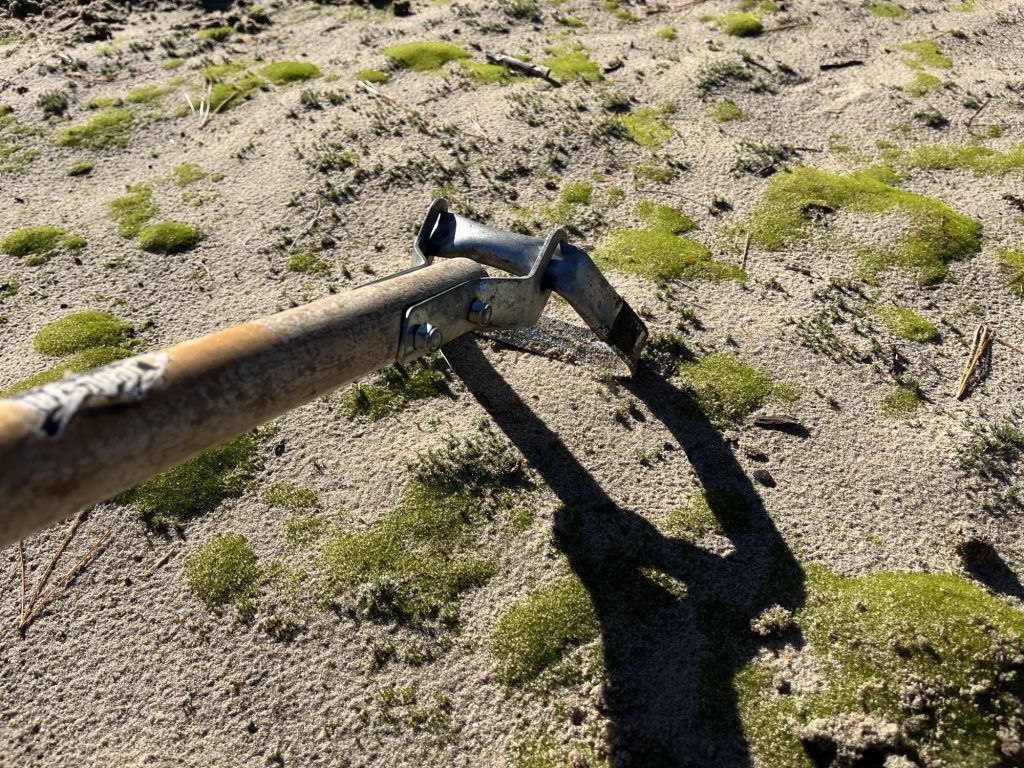
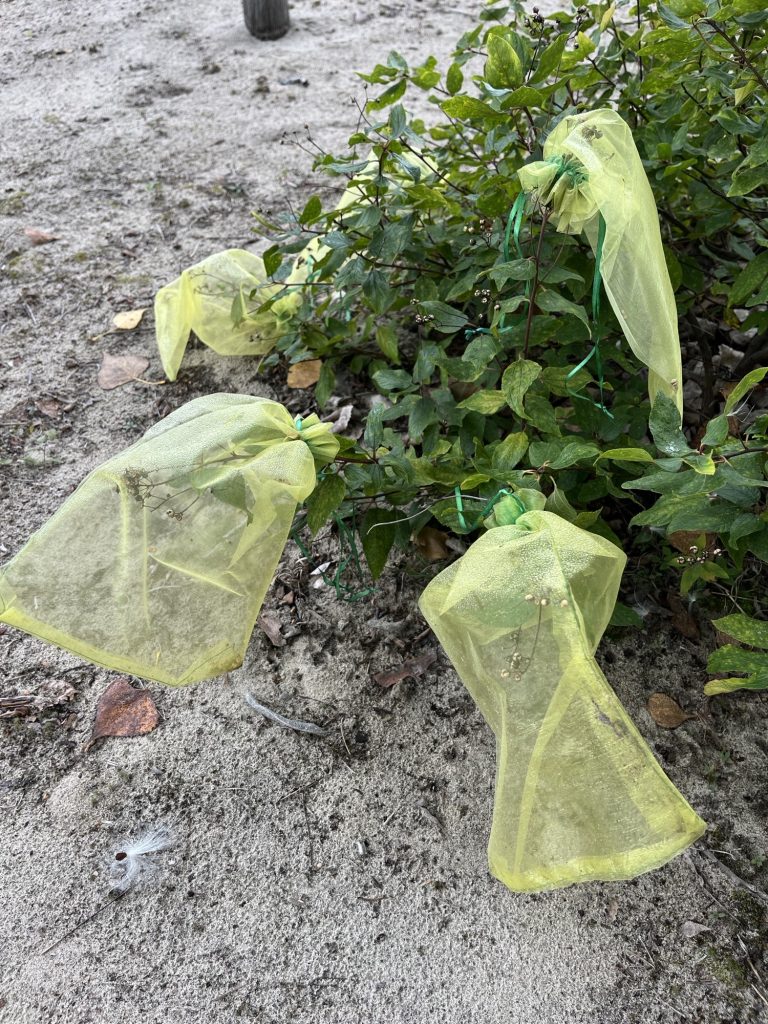
At Dune #1, we pulled up thistles and moss; the former much reduced after big efforts last summer and this summer too, but the latter much increased because of the wet July and August of 2026. The moss spreading on the shadier, damper side of the dunes could be problematic for the Ghost Tiger Beetles which need clean sand and easy access to the surface. At Dune #2, we pulled up much of the spotted beebalm that has proliferated in recent years. The goal is to allow growth in defined patches to make it easier for insects to move from plant to plant. We have also installed bags to collect seeds from key plants such as the New Jersey tea, swamp milkweed, and butterfly milkweed for winter sowing. Dune #3 saw us continue to clear away much of the vegetation down to the bare sand, leaving only key species in place.
Last Day for Volunteering
Volunteering work for the Pinhey Sand Dunes wrapped up for the year on October 25. Some Friends of Pinhey Sand Dunes representatives may still be there when the weather allows but no more formal volunteer works are planned for this year. The Friends of Pinhey Sand Dunes thanks all of you who came to help support this unique Ottawa landscape.
Transforming Dune #3
By Karen Lane
While much of our attention has been focused on Dune sites #1 and #2 in recent years, many of us worked hard at Dune #3 this summer, and the transformation has been incredible. Around one-third the size of Dune #2 and located a short walk to the National Capital Commission (NCC) Greenbelt Parking Lot P15 on Slack Road, Dune #3 is nevertheless highly valuable as part of the Pinhey Dune System.
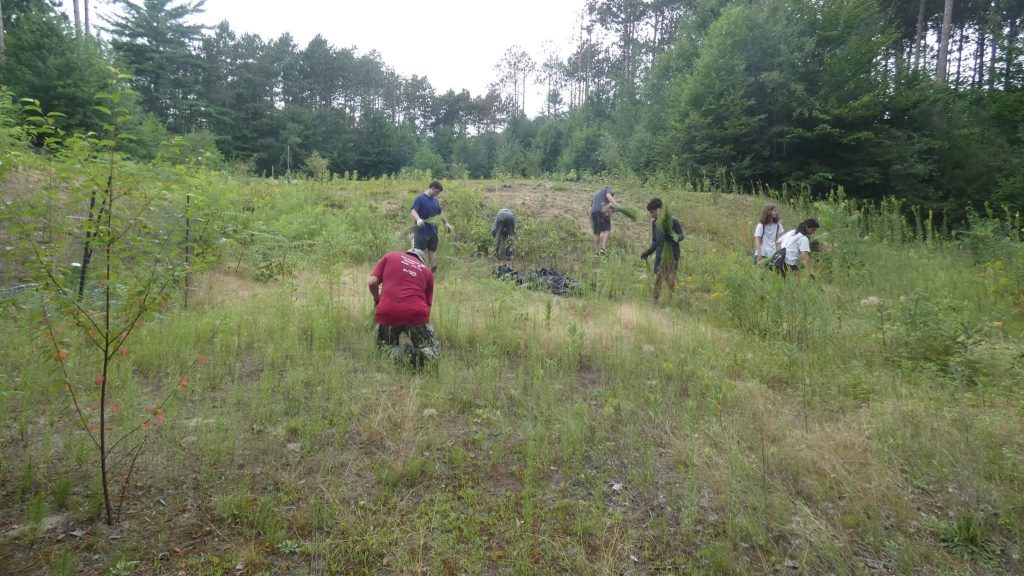
The NCC handed over Dune #3 – then planted woodland – site to Biodiversity Conservancy International (BCI) around a decade ago. It was the second Pinhey Dunes site after Dune #1, and dune co-founder Andrew Mott has recently been leading efforts to turn it into a native flower site, distinct but connected to our other sites.
We cleared the woodland debris years ago. But with BCI’s attention focused on the larger Dune #1 and, later, the vibrant Dune #2, the area became overrun with purslane (Portulaca oleracea). This edible, medicinal, and pretty plant with small yellow flowers nevertheless has a robust taproot system and is highly invasive. In recent years, we let other weeds take over the area, creating shade, which made it harder for the purslane to flourish and it has become controllable.
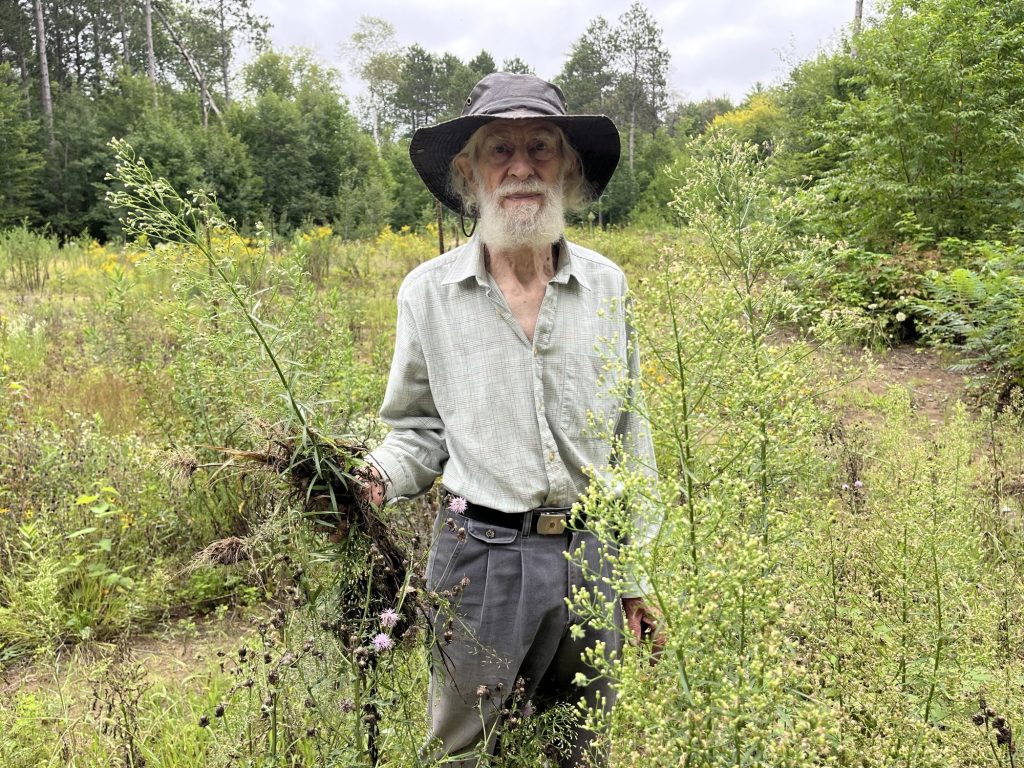
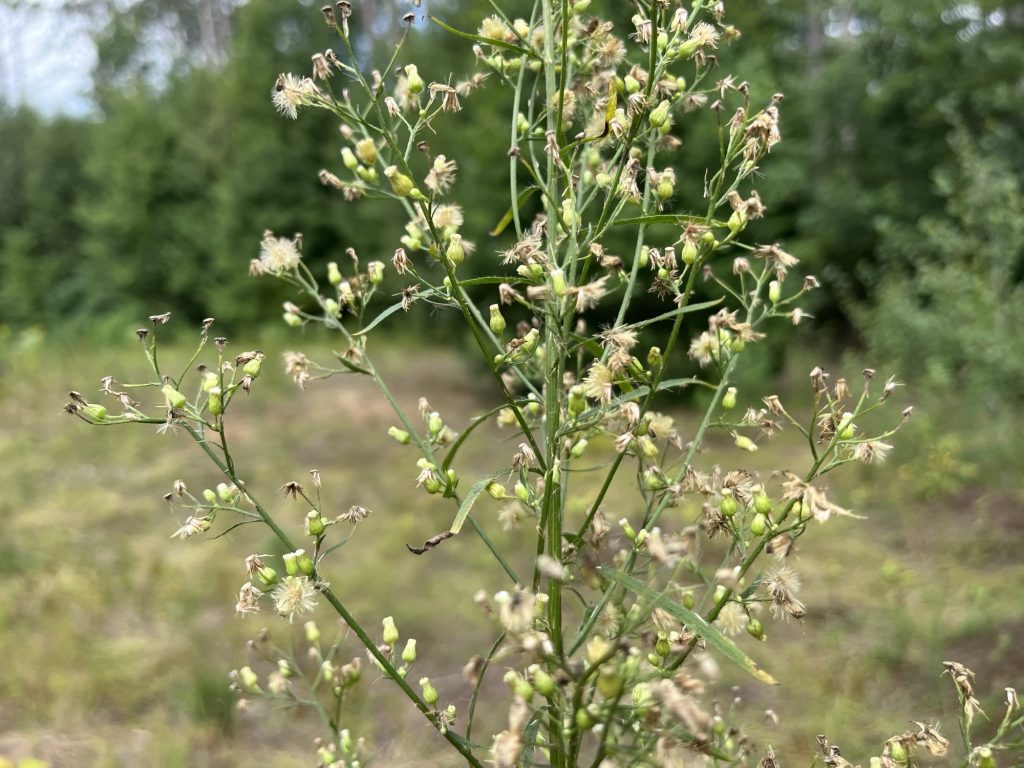
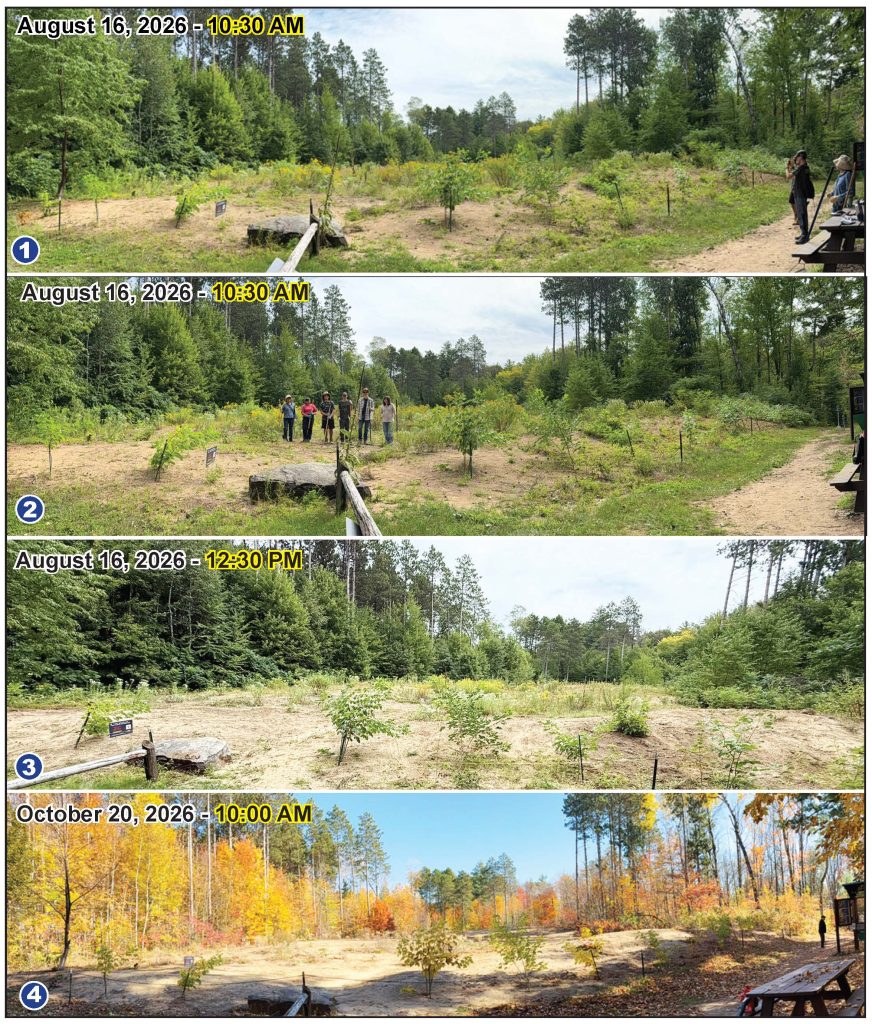
Next came a focus on horseweed (Conyza canadensis): Andrew and others have spent the last 3-4 years trying to weed it out. And this year, he seems to have got to it just before it started dropping its seeds. Sheep sorrel (Rumex acetosella), hard to dig out due to its extensive roots, was also in his sights. Throughout August, September, and October, we paid much more attention to Dune #3, weeding ever more thoroughly to expose the sand. By the end of this month, Dune #3 more closely resembled Dunes #1 and #2.
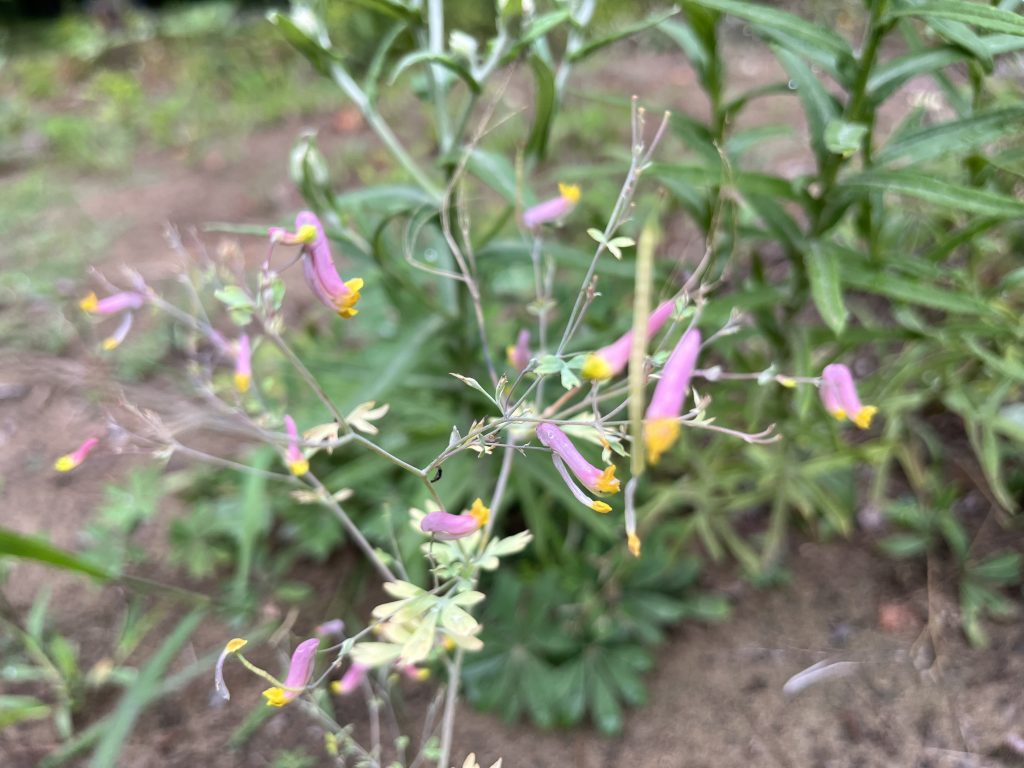
Dune #3 has a lot to offer, including the fairly rare-in-Ottawa white Macoun’s cudweed (Pseudognaphalium macounii) and the dainty whorled milkweed (Asclepias verticillata). Some of both have been transplanted to Dune #2 with a view to boosting their numbers in our area. Dune #3 also has some wild lupins (Lupinus perennis), some of which were part of a past McGill University study on hybrid plants, native rock harlequin (Corydalis sempervirens), some self-seeded golden rod (Solidago genus), and hop trees (Ptelea trifoliata), all which host bees, beetles, and butterflies. The site also has the less welcome but attractive pearly everlasting (Anaphalis margaritacea) and the bladder campion (Silene vulgaris).
An underground septic tank installed many decades ago has seriously disturbed the Dune #3 site, so scope is more limited there than at our other sites. Still, it’s an important site and the ultimate goal is to use the space for native plants, attract even more of our local fauna, and to establish a clear and dry connection to Dune #2 through the woods.
The Transformation of Dune #3 over recent months
Pictures by Pete Dang
Trick or Treating at the Dunes
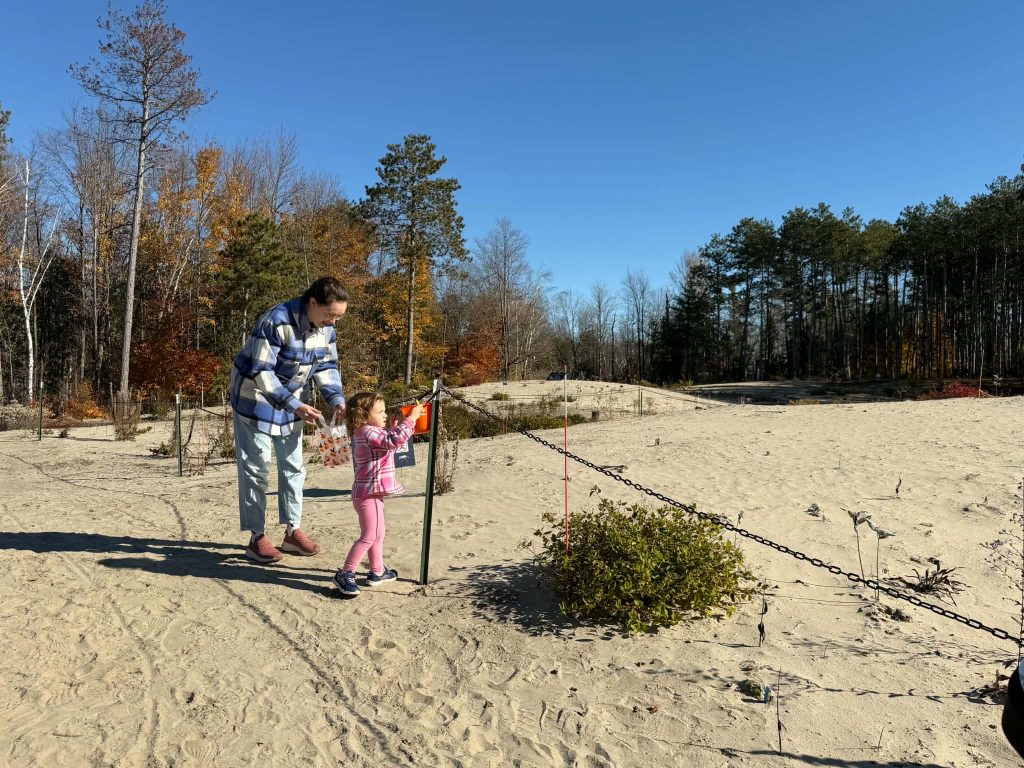
Visitors big and small came to the dunes on Sunday October 25 for early Halloween at the dunes. This included a treasure hunt around Dune #2 to find pumpkin baskets filled with goodies. “We couldn’t have asked for a better day to enjoy the fall colours in the trees surrounding the dunes and celebrate,” said Veronica Pidchenko, Friends of Pinhey Sand Dunes event coordinator.