
This newsletter includes:
- September update on new bioblitz, BCI annual meeting, and ongoing work
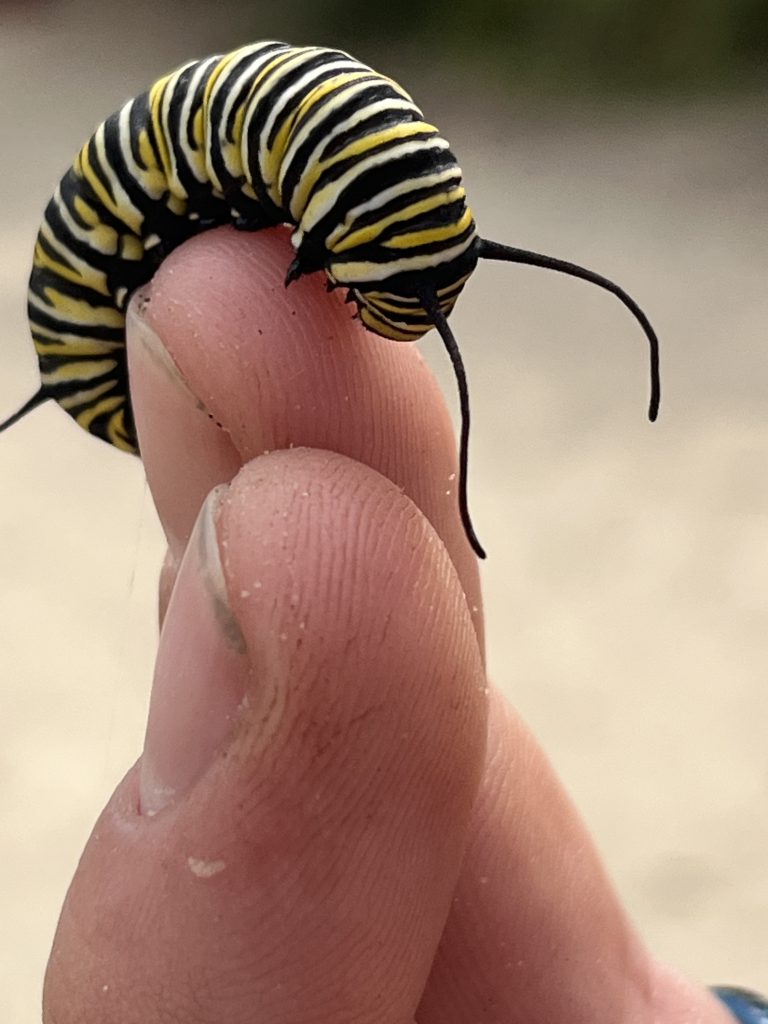
- Monarchs on the move
- Moon Light event at the Dunes
- Summer employees reflect on their work
- Becoming a summer employe
Keeping Busy As Summer Draws to a Close
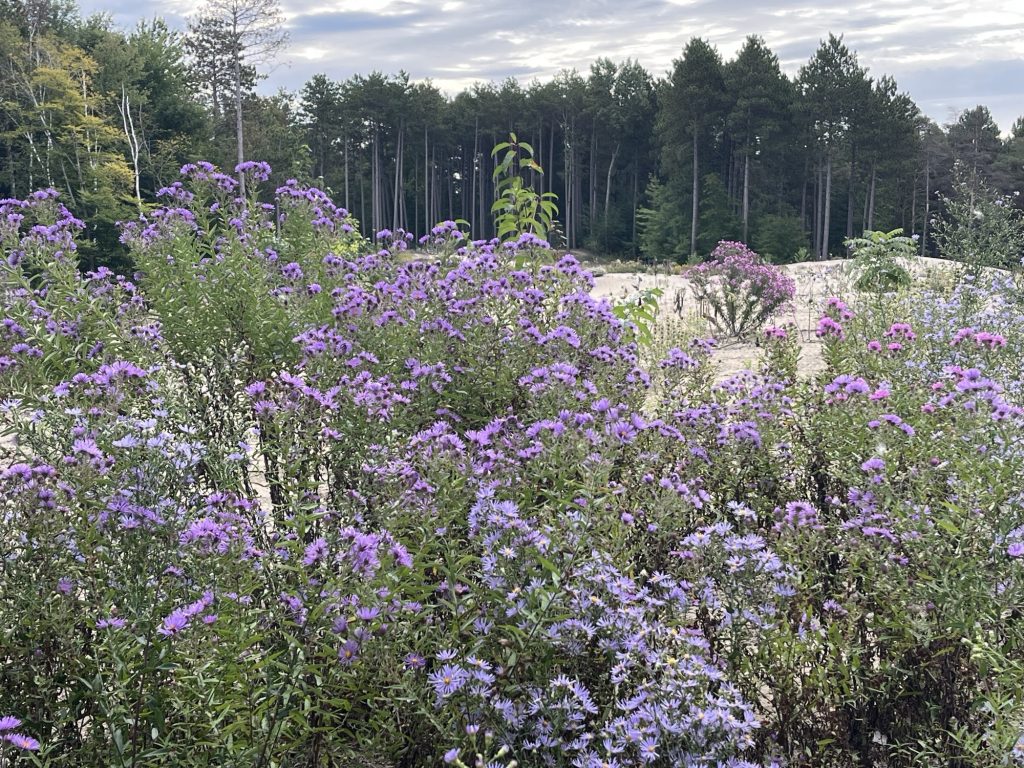
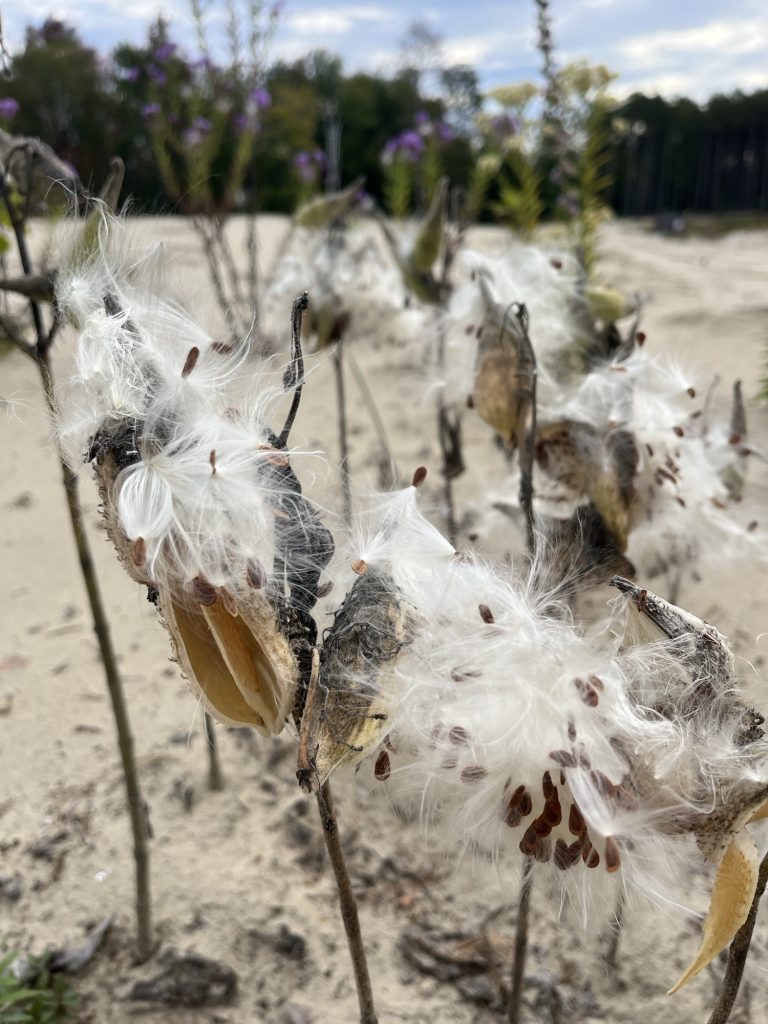
September at the dunes was still bright with the purple-flowered New England aster and the white feathery seeds of the Common milkweed.
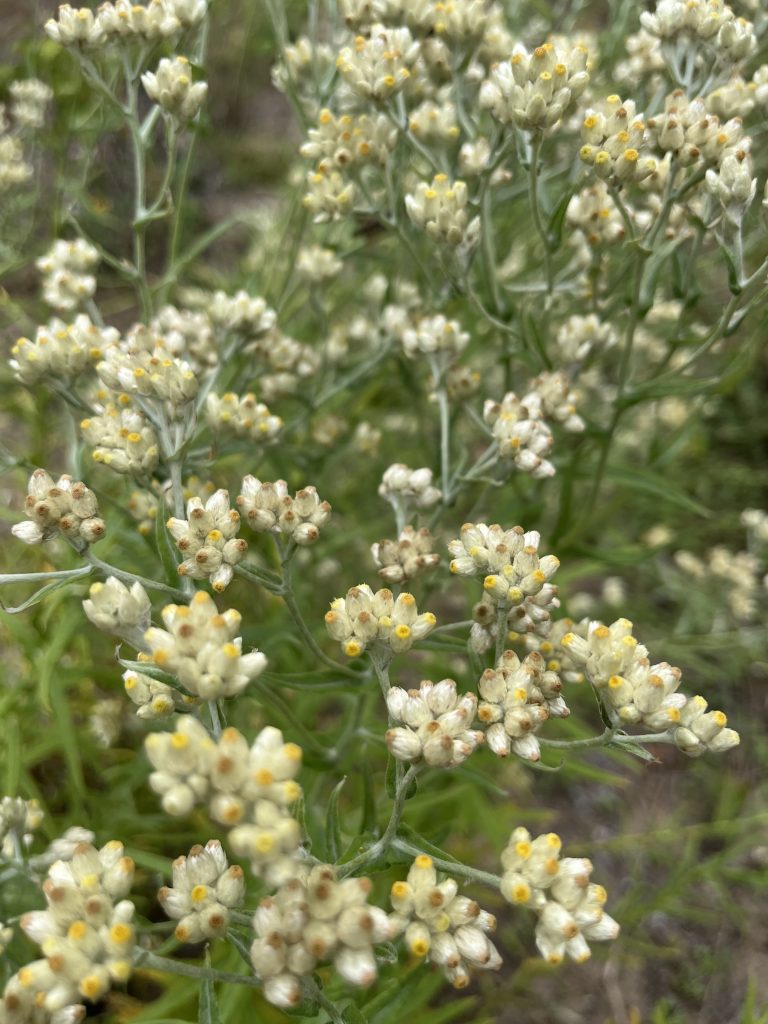
Weeding and Transplanting: Slightly lower temperatures and fewer rainclouds meant we could continue weeding out overenthusiastic Spotted beebalm and planting around the edges of the dune along the entrance way at Dune #2. At Dune #3, we were doing a lot of clearing work, taking the land right down to the sand underneath. The site has a lot of the Macoun’s cudweed, which is fairly rare in this part of the city. Since this tall, white-flowered plant is a host for the American Lady butterfly, we have been taking young plants from Dune #3 and transplanting them in Dune #2.
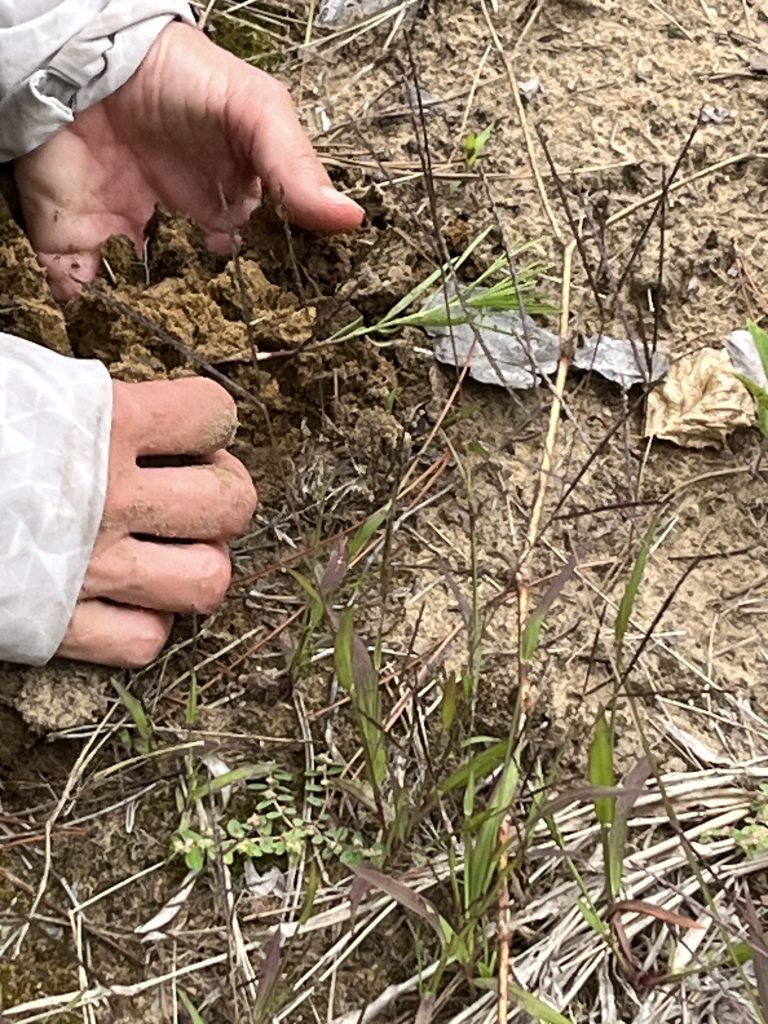
Butterflies: We were still seeing some evidence of butterflies. At Dune #3, we spotted some second brood Swallowtail caterpillars, taking the count across the three main sites this year to around a dozen by the end of September. This year has been a difficult one for the caterpillars since many were killed by a cold snap earlier in the year. We have also found a couple of Monarch caterpillars. They still have time to develop and start their journey south. Meanwhile, we have put a barrier around a tree near the Dune #2 shipping container where an antlion has hollowed out several traps for prey.
Meeting Canada’s Leadership: Biodiversity Conservancy International (BCI) President Pete Dang spoke with Canada’s Prime Minister, Mark Carney, and Canada’s Governor General, Louise Arbour, about the Pinhey Dunes during a state dinner at Rideau Hall to honour To Lam, President of Vietnam, on September 24.
Visitors: We welcomed scouts, elementary school students, and other groups to the dunes. Notably, on September 18, BCI President Pete Dang and Andrew Mott gave a presentation to Carleton University students on the Pinhey Sand Dunes. Students then came to count Ghost tiger beetle burrows, with a focus this year on whether proximity to vegetation affects burrow location. This will add to their counts of past years. Pete and Andrew also showcased the dunes at the Vietnam Moon Festival on September 4-6.
Bioblitz: Friends of Pinhey Sand Dunes chair, Frank Moore, has kicked off a bioblitz project on iNaturalist to identify and have locations for plants on the forest edges of the dunes, that are a threat to the dunes, like Poison ivy and Glossy buckthorn. Talk to Frank for more information.
BCI Annual General Meeting: On September 9, Board members shared information about support received from the City of Ottawa for plants and fencing, from TD Bank to support educational activities, and from the Canada Summer Jobs Program. Rebecca Trueman, Managing Editor of Biodiversity Conservancy International’s journal – Biodiversity – discussed the strong and wide geographic source of submission of papers and also of readership. The team is working on an upcoming special issue on bamboo. Several of the Board members were re-elected for new terms, while Bruce Gill joined as a director focussing on species at risk.
Ottawa Citizen: A feature on September 5 namechecked the Pinhey Sand Dunes and other sand dunes that have a special place in Ottawa’s geological history.
Monarchs on the Move
By Karen Lane
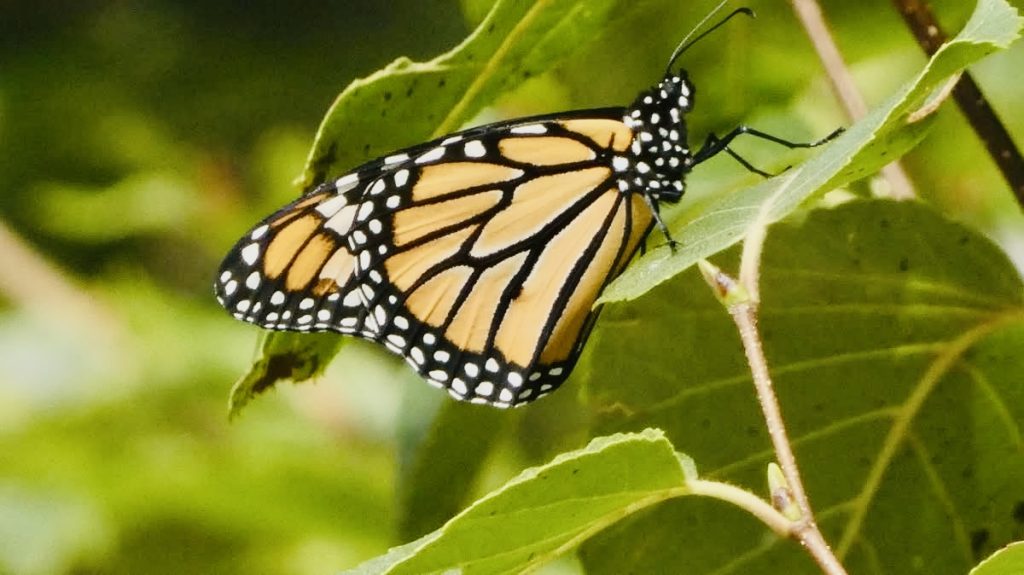
Many Monarch butterflies have already started their great migration to the warmer Mexico climes; others – like some at the dunes – are still in caterpillar form and will start the journey later. Here are some interesting places to find out more:
Background information: https://www.farmersalmanac.com/monarch-butterfly-migration
Migration monitoring in Ontario: https://www.facebook.com/groups/711833448865330
The annual Monarch monitoring blitz to count numbers across North America finished in early August. While anecdotally, talk is that numbers rose this year, the final figures are yet to be tallied.
See here for an interactive map of monarch sightings: https://commenvcoop.maps.arcgis.com/apps/instant/basic/index.html?appid=ec00d03727ec431e97ec2df48ffa1009
Keep an eye here for the final results: https://www.cec.org/international-monarch-monitoring-blitz/

Enjoying Full Moon At The Dunes
By Karen Lane
On September 26, some 40 adults and children gathered at Dune #2 to see the full moon and stars and to learn about the nighttime habits of our special dune insects. “It was so great to see so many people enthusiastic about our dunes and dune life under the glow of the full harvest moon. I’m really happy with how the event turned out and am looking forward to planning more night-themed events in the future! Be sure to keep an eye out for them, and keep your flashlights handy! Thank you so much for joining us,” said Veronica Pidchenko, Friends of Pinhey Sand Dunes event coordinator. BCI’s Pete Dang and others gave a tour of the dunes and explained how plants and animals at the dunes behave after dark.
Summer Employees Discuss Their 2026 Work
By Gabriel McMurren, Alan Momo, Yasmin Omar, and Megan Smith
From June to August 2026, four young professionals from different educational backgrounds worked at the Pinhey Sand Dunes as biological technicians for Biodiversity Conservancy International (BCI), under the supervision of Dr. P.T. Dang and Andrew Mott. The four of us are: Gabriel McMurren, Alan Momo, Yasmin Omar, and Megan Smith.
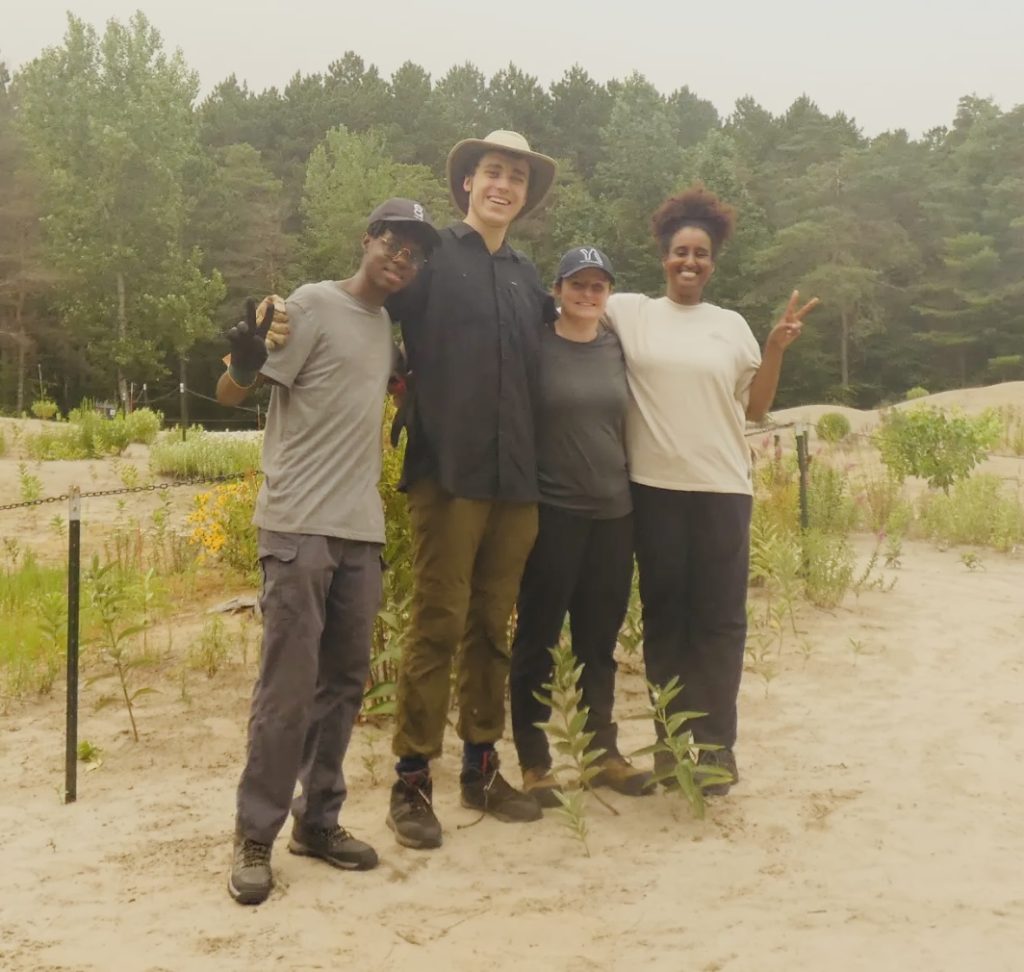
Gabriel recently returned to Ottawa to begin an MSc. in biology at Carleton University having completed his BSc. (Hons.) in wildlife biology and conservation at the University of Guelph. Alan is currently in his second year of his BSc. (Hons.) in mathematics with a minor in computer science at the University of Ottawa. Yasmin has a BSc. (Hons.) in environmental science from Carleton University and a postgraduate certificate in environmental management and assessment from Algonquin College. Megan has a BSc. (Hons.) in environmental science from Carleton University, concentrating on ecology, conservation, and biodiversity.
In our roles as biological technicians, we were introduced to the full suite of responsibilities needed when restoring precious ecosystems, and given a wide range of opportunities to develop the requisite skills.
Running Educational Programs
Throughout June, our team delivered educational programming to elementary students through presentations, guided tours, and hands-on activities. These were excellent opportunities to teach children about the importance of the dune habitat and interest them in biological restoration. In addition, we organized educational programs for adults through presentations and guided tours. We held two major three-day events over the summer – Butterfly Day and Tiger Beetle Day. These events engaged the public in the work being done at Pinhey Sand Dunes and highlighted the sensitive species that are being protected.
Maintaining the Dunes
Sand sifting: The Pinhey Sand Dune system is an ideal habitat for tiger beetles because it consists of hot, loose sand in which they can burrow. To keep the sand clean for the tiger beetles, polluted sand (mostly as a result of pine debris), we raked, shovelled and then put sand through mesh filters. This creates clean sand which is then shaped into a dune. This maintains a varied landscape, creating depressions that allow strategic water flow.
Dune #2 sanctuary maintenance: A large part of the success of Pinhey Sand Dunes’ butterfly sanctuary lies not only in planting and increasing our plant population, but also in maintenance. To keep the sanctuary in balance, and prevent the smothering of butterfly plant species, grasses, horsetails and other harmful species were selectively removed.
Chain fencing: To protect the dunes and create clear pathways for visitors, rope boundaries were created in previous years. However, heat and natural wear and tear degraded these ropes so they no longer provided a sufficient barrier. In their place, we installed new chain boundaries for Dune Site #2. These new chains are more durable and aesthetically pleasing.
Boosting the genetic pool of tiger beetles: To ensure the tiger beetle populations within the Pinhey Sand Dunes are healthy and resilient to change, we need to enhance the genetic diversity of the population. To accomplish this, in July, we visited two heavily disturbed and unprotected locations in the St. Lawrence watershed and brought three species of tiger beetles to the Pinhey Sand Dunes.
Conducting Research
Watering Experiment: To test which watering regimen would best benefit the butterfly sanctuary, we conducted an experiment from June to August. This involved watering 15 boneset plants regularly with funnels at varying depths. At the end of the experiment, we compared the root length and height of the plants to determine that using a watering funnel at a 4-inch depth resulted in the best plant growth.
Butterfly Observations: To fully understand the effectiveness of the butterfly sanctuary, recording butterfly observations and tracking population patterns is essential. Our team contributed to this by noting observations of butterflies, eggs, or caterpillars on host plants within Dune Site #2, and by placing protective tents.
Butterfly Sanctuary Mapping: We created a map of significant host plant species to identify the number and placement of distinct species in Dune #2. In the future, this map will be available digitally using GPS coordinates and mapping software. The goal of this project is to have a database of the location and quantity of plant species to influence future planting decisions and provide a biodiverse ecosystem for sensitive insect species.
How Our Summer Work Helped Us
We believe our time at the dunes has equipped us with valuable skills in scientific communication, hands-on conservation management, and outreach coordination. These skills are essential for pursuing further education and employment opportunities within the conservation field.
Gabriel reflects: I grew up hearing that the best field positions in wildlife biology offer you a deep sense of connection to the wildlife around you. By the end of this summer job, through the scientific guidance of my passionate supervisors and the chances I had to show visitors creatures they found just as exciting as I did, I felt exactly that. As a trained ornithologist working in a habitat inherently shaped by its insect diversity, this summer has been an ultra-engaging professional road-not-taken that’s given me a great appreciation for the dedication it takes to keep urban ecosystems safe from disturbance!
Alan reflects: As someone with no background in environmental work or conservancy, this opportunity was a great exposure to the field. In the span of 3 months, I went from mistaking Black-eyed susan as sunflowers to being able to identify a sizable portion of the dunes’ fauna and flora, and even giving brief presentations of the dune ecosystem to visitors. I discovered a passion for nature and conservancy while working at the dunes, and although I do not see myself completely switching fields of study, it did make me consider specializing in the more environmentally focused areas of mathematics such as mathematical modelling and mathematical biology.
Yasmin reflects: Every morning when I headed out to the dunes, I was excited to learn something new. Once I was equipped with that knowledge, I was excited to share it with the community. Conservancy is not only about physical protection, but also engaging with people of all ages about the importance of the nature around them.
Megan reflects: As Pete would always say: “You are not here just to work hard, but to learn.” I absorbed so much knowledge from working at the dunes and had the privilege of sharing it with others. I found it so rewarding to see members of the public become interested in conservation and the ecological importance of the dunes.
Acknowledgments
We would like to extend our sincere gratitude to Dr. Pete Dang for supervising our work at the Pinhey Sand Dunes. His support throughout our work not only helped us develop valuable hands-on experience, but also ensured that our time in the field was an opportunity for meaningful learning. We are incredibly grateful for the lasting knowledge, mentorship, and encouragement he has provided throughout this summer.
We would also like to express our sincere appreciation to Andrew Mott and Frank Moore for their support, guidance, and kindness while we worked at the Pinhey Sand Dunes.
Finally, we’d like to recognize the Canada Summer Jobs Program for making this experience possible through the funding offered to Biodiversity Conservancy International for young professionals seeking summer work.
Becoming a Future Summer Employee
The Pinhey Sand Dunes intends to employ students under the Canada Summer Jobs Program again during the summer of 2027. For information about future opportunities, keep an eye on the government website and on the Pinhey Sand Dunes Facebook page.