
This newsletter includes:
- July update on the dunes; Upcoming photography weekend
- New Chair, Frank Moore, discusses his goals
- CTV showcases Pinhey Sand Dunes
- Beetle Weekend brings visitors
- Bamboo seedlings planted in Vietnam
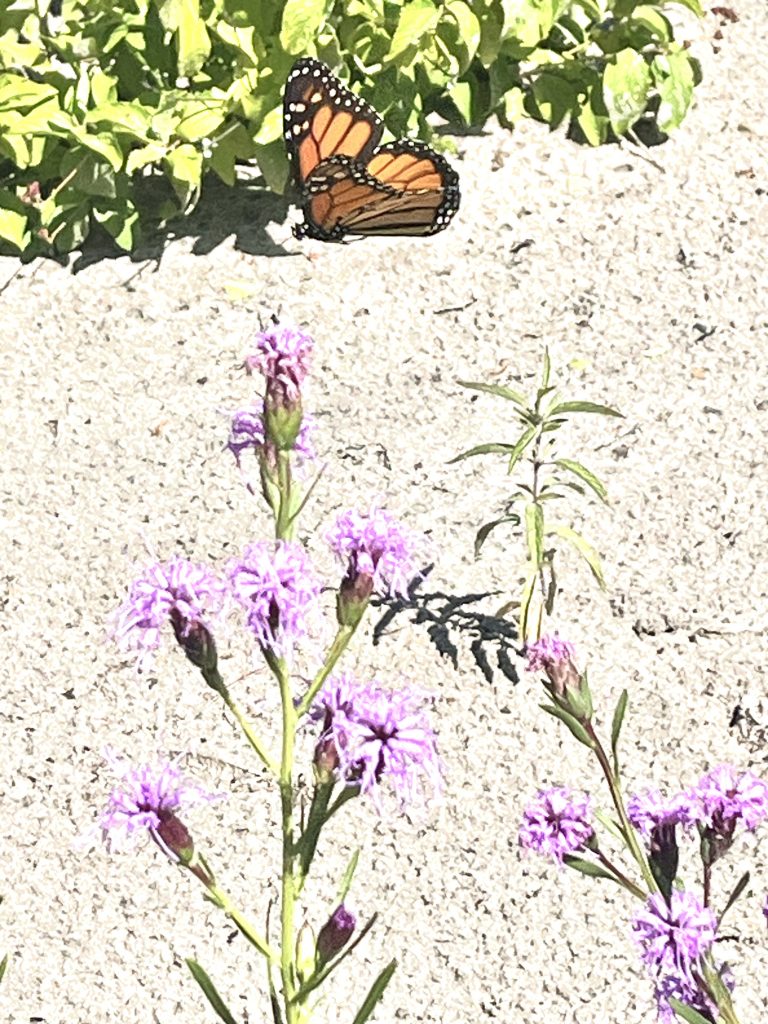
The dunes are active with fauna and flora this July despite the alternating scorching days and torrential rains. There are butterflies – monarchs and skippers among others – on and around the host plants as well as beetles making their marks in the sand and on the plants. The latter were key to our Beetle Weekend on July 17-19. We released a number of Painted Lady butterflies mid month. There are still a few caterpillars under nets but we expect butterflies to emerge soon so we can remove the nets.
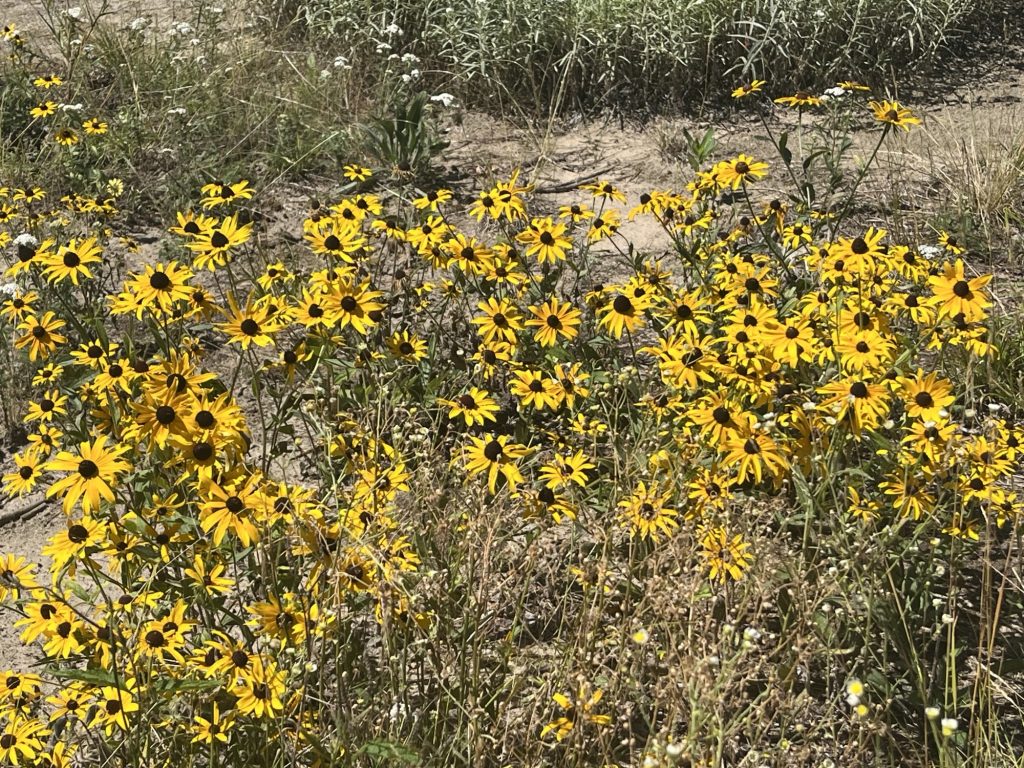
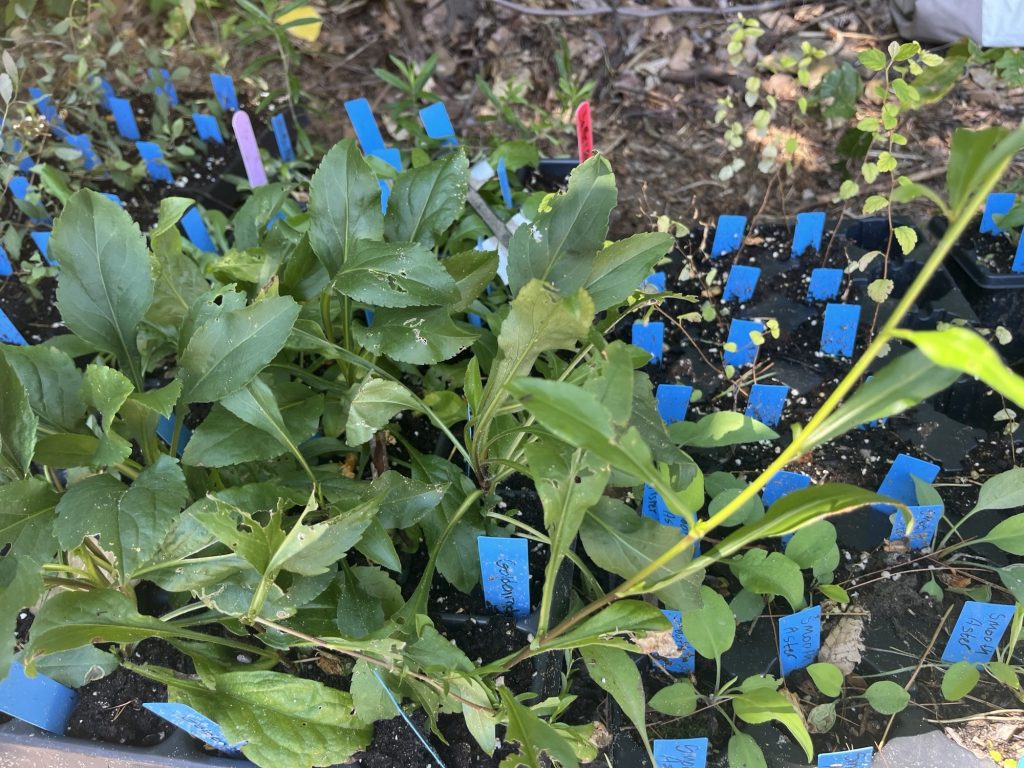
Restoration and maintenance: Work continues at our three dune sites. At Dune #1, we are mostly clearing and raking since there has been a big accumulation of debris after recent rains. At Dune #2, we continue to weed out non-native species and pull up the ever-expanding Spotted beebalm, Black-eyed susans, and Yarrow which we are donating to the Ottawa Wildflower Seed Library and other gardeners looking to plant native species. We have, in turn, received donations of the Smooth Aster, Showy Tick Trefoil, Prairie Cinquefoil, Meadowsweet and other plants. We are also stripping dark moss layers off the top of affected dunes. Painting is ongoing to add detail to the shipping container mural by a volunteer artist. Meanwhile, at Dune #3, we are working to remove some of the Purslane which had invaded the space but now looks to be controllable.
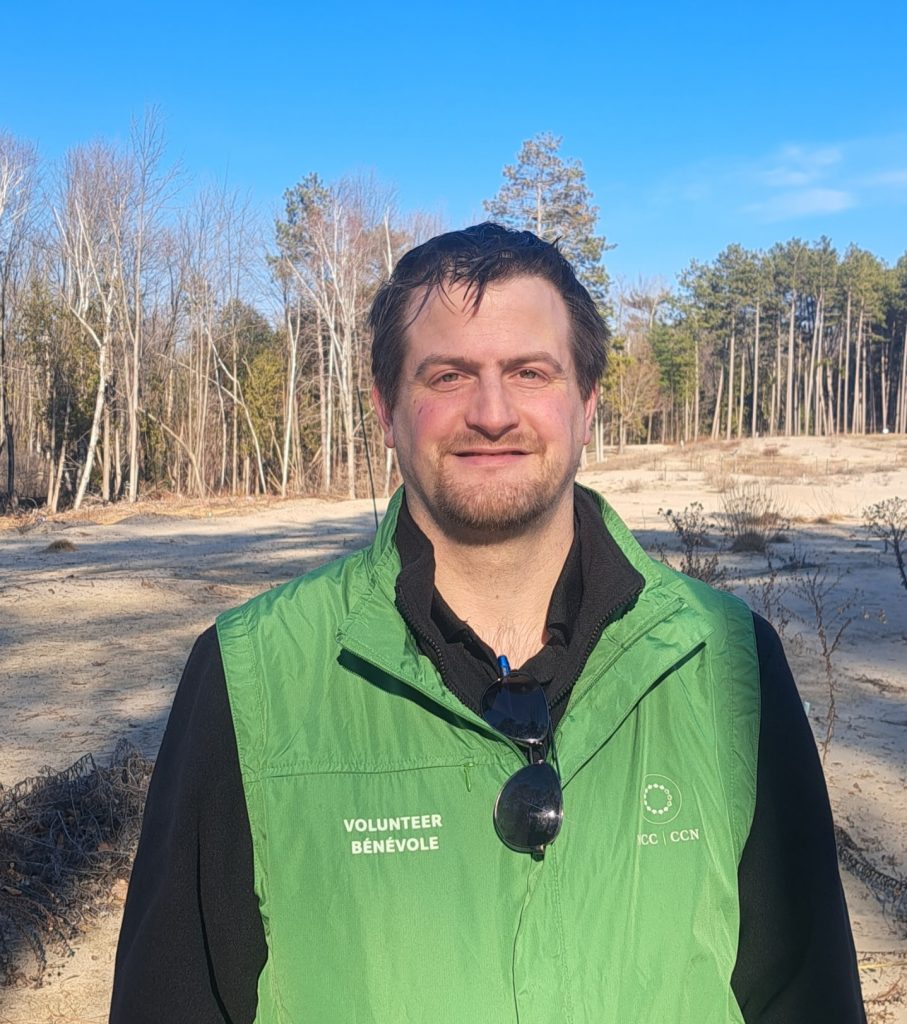
New Chair: Frank Moore, a long-standing presence at the dunes has assumed the Chair of The Friends of Pinhey Sand Dunes, which oversees all our work. He takes over from Berit Erickson who has been Chair for several years and will now focus her efforts on looking after the plants at the dunes. The Friends of Pinhey Sand Dunes thanks Berit for all the many positive changes she enacted for the dunes, her ongoing knowledge-sharing, and ever-present smile.
New Chair: Frank Moore, a long-standing presence at the dunes has assumed the Chair of The Friends of Pinhey Sand Dunes, which oversees all our work. He takes over from Berit Erickson who has been Chair for several years and will now focus her efforts on looking after the plants at the dunes. The Friends of Pinhey Sand Dunes thanks Berit for all the many positive changes she enacted for the dunes, her ongoing knowledge-sharing, and ever-present smile.
Join us for Photography Weekend August 29-30: We will be leading tours at 10:00 am on both days, focussed on helping participants find and get good shots of the wildlife and flowers. We will be awarding prizes for the best pictures taken at the dunes. Send any entries to Frank Moore.
Separately, we are also seeking fresh photos for our Facebook cover page. Please submit your snaps to the Google drive. When you upload the photos, please label the image with your name so we can give you proper credit. We look forward to seeing your images.
New Chair, Frank Moore, Shares His Thoughts
By Karen Lane
Frank talks about his passion for the dunes and how he sees the dunes’ future.
1. When and why did you get involved with work at the dunes?
I got into the dunes through an environmental science field course at Carleton University that brought us via bus to a seemingly barren landscape after an introduction at the university by Pete Dang, Henri Goulet, and Andrew Mott. This was my introduction to a wild, extreme environment that trees had been cut down to create. I had a theoretical vision of what I was being shown but the sheer, and extreme, visceral impact of the heat and the cool insects living on site was life changing.
2. Why do you think the dunes are important environmentally and for the community?
The dunes are important as they house species that live only in this habitat. Biodiversity is key to the environment and the dunes overall have 10,000 species on site. That means that protecting this site also protects this biodiversity. The dunes help the community as a space in which to learn about the environment, a place where people can be close to nature, and a place where they can be a part of the ongoing conservation. Of course, the dunes is also a place for students to complete their volunteer hours.
3. How has your background helped you understand the needs of the dunes?
I have a Bachelor of Science from Carleton University which gives me a wide science background keeping me grounded in how we solve problems in the field. My long-term volunteering at the dunes means I am also aware that work here can be physically demanding, which makes it challenging to bring on board volunteers long term. It also taught me that it is crucial to consider the needs of the organization and to record what is known about the dunes to ensure the dunes are taken care of for future generations without any gaps in leadership.
4. As the new Chair, what will you be prioritizing?
My biggest priority is working on learning as much as possible from Pete, Henri, and Andrew regarding the knowledge they have built up in the many years since they started the conservation work here. At the same time, I want to ensure Friends is a self sustaining organization. Building a solid leadership team on site is key so I can focus on bigger picture priorities. And lastly, I aim to establish a professional-level tour of the dune sites along with our tour guides and a complementary QR/web-based tour that visitors can use when tour guides are not present.
5. How would you like to see the dunes, 10 or 20 years from now?
I would like to see them recognized as a gem in the National Capital Region, and as a tourist destination with a team of professional guides to bring tourists through the site. I also want to see it become a haven for schools and universities to use as an outdoor education location. I hope it will eventually be larger in size and even interconnected with three of the four sites linked by open dune.
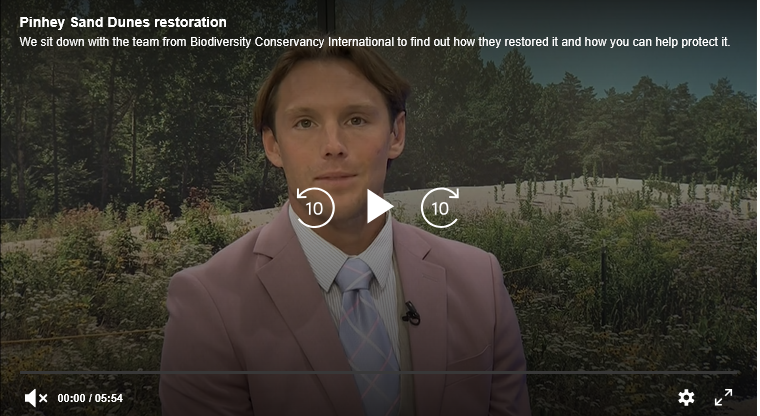
CTV showcases Pinhey Sand Dunes
In a sign of ongoing city interest in the dunes, CTV on July 23 broadcast an interview with Biodiversity Conservancy International President Pete Dang, and one of the dunes 2026 student technicians Gabriel McMurren. They discussed the history of the dunes, the species that can be found there, and the hard work that volunteers are doing to restore and maintain the site.
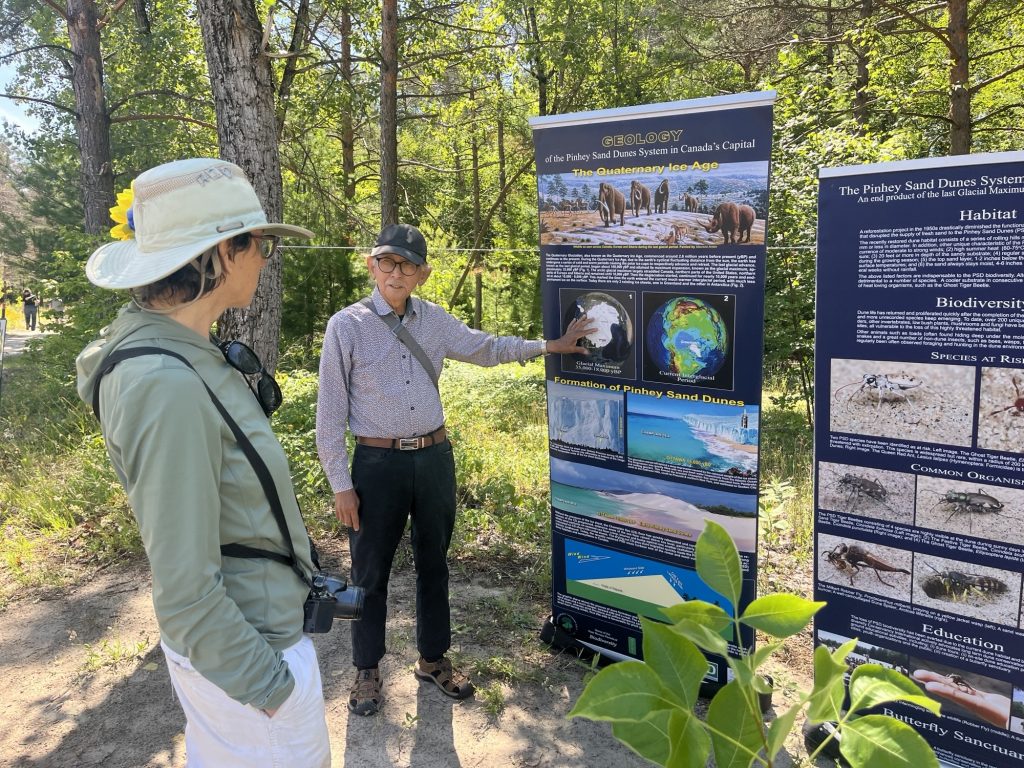
Beetle Weekend Draws Visitors Despite Uncertain Weather
Our experts led tours on Friday July 17 and Sunday July 19 at Dune #2 to showcase our special beetle habitat. Unfortunately, heavy rain on Saturday July 18 forced us to cancel that dayThe National Capital Commission sent a representative, indicating their ongoing support for the dunes. The leaders explained about the four species which are all doing well at the dunes: the rare heat-loving Ghost Tiger Beetle (Ellipsoptera lepida), the Festive Tiger Beetle (Cicindela Scutellaris), the Big Sand Beetle (Cicindela formosa), and the Punctured Tiger Beetle (Cicindela punctulata).
First Bamboo Seedings Planted in BCI’s Vietnam Project
Under the Biodiversity Conservancy International (BCI) project to help Vietnam build its native forests and improve biodiversity, 200 bamboo seedlings – currently around 75 cm tall – were this month planted in the central city of Hue. Bamboo is local, fast-growing, and can be an income source for the nearby population. The next initiative under the project will be to grow bamboo from seeds to be bought from China with the aim of establishing a full 1-2 hectare bamboo forest in a few years.