
This newsletter includes
- Dune update: New plants, rain capture system, and more
- Join us for Beetle Weekend July 17-19
- PSD bee hotel repaired
- How to make your own bee hotel
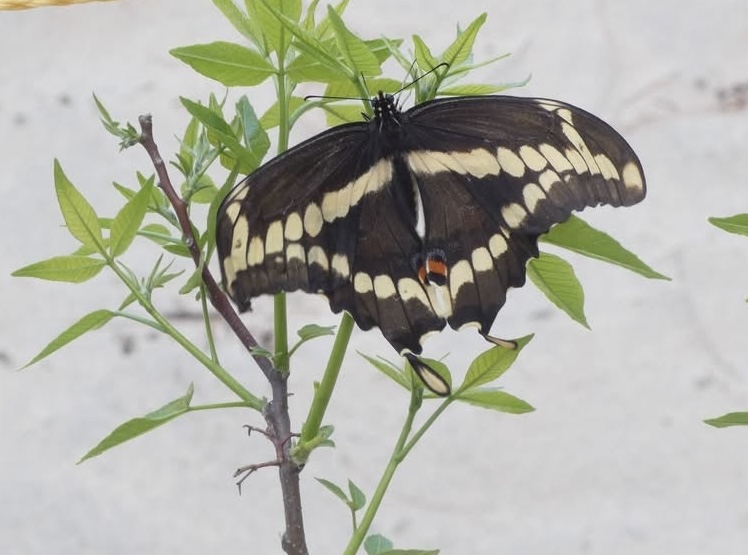
- A busy Butterfly Weekend – June 26-28
The butterflies – monarchs and swallowtails in particular – were out and about this month, helping us to celebrate Butterfly Weekend. Much volunteer work is ongoing to improve the dunes too, despite the thunderstorms that we saw throughout the month.
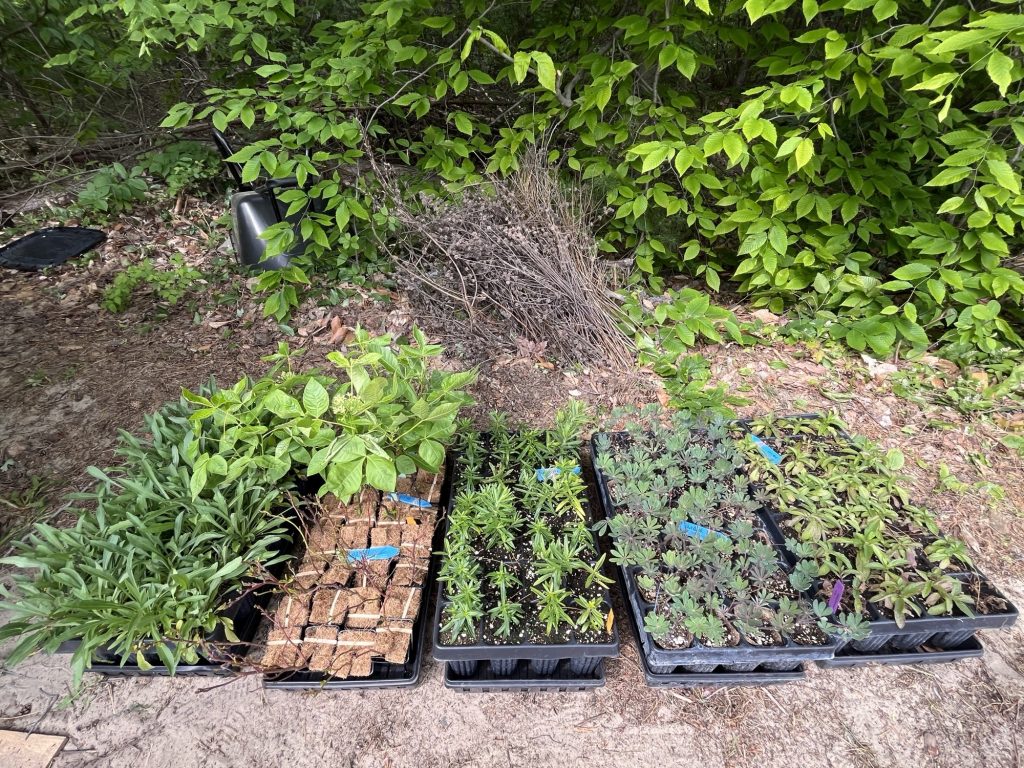
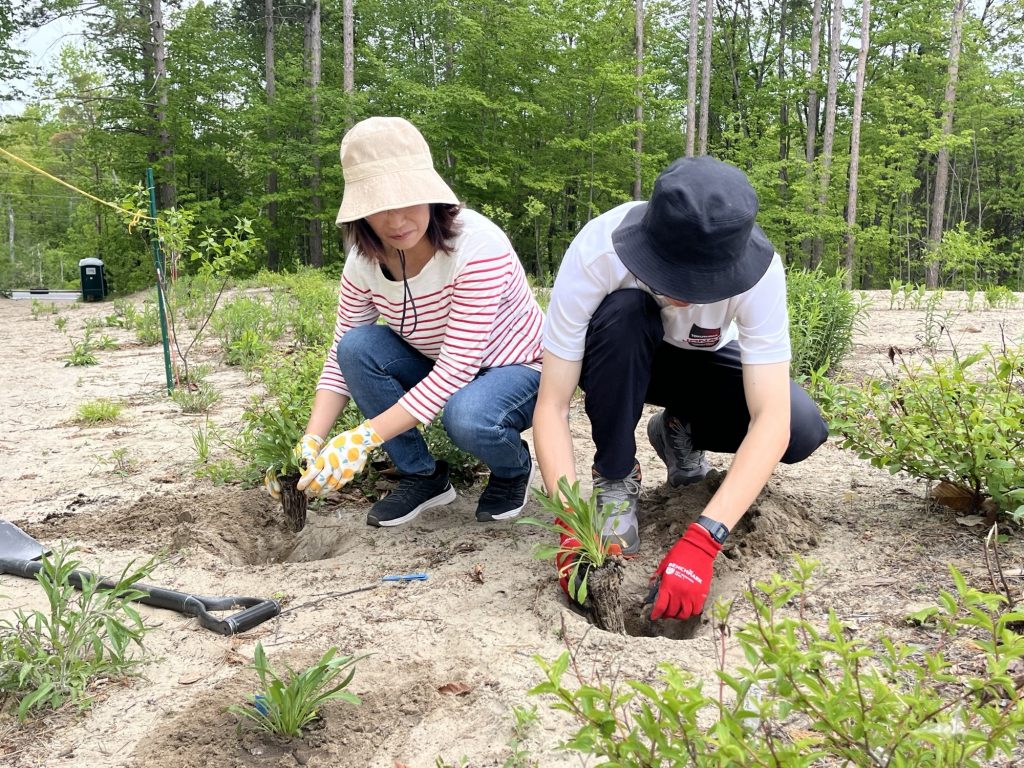
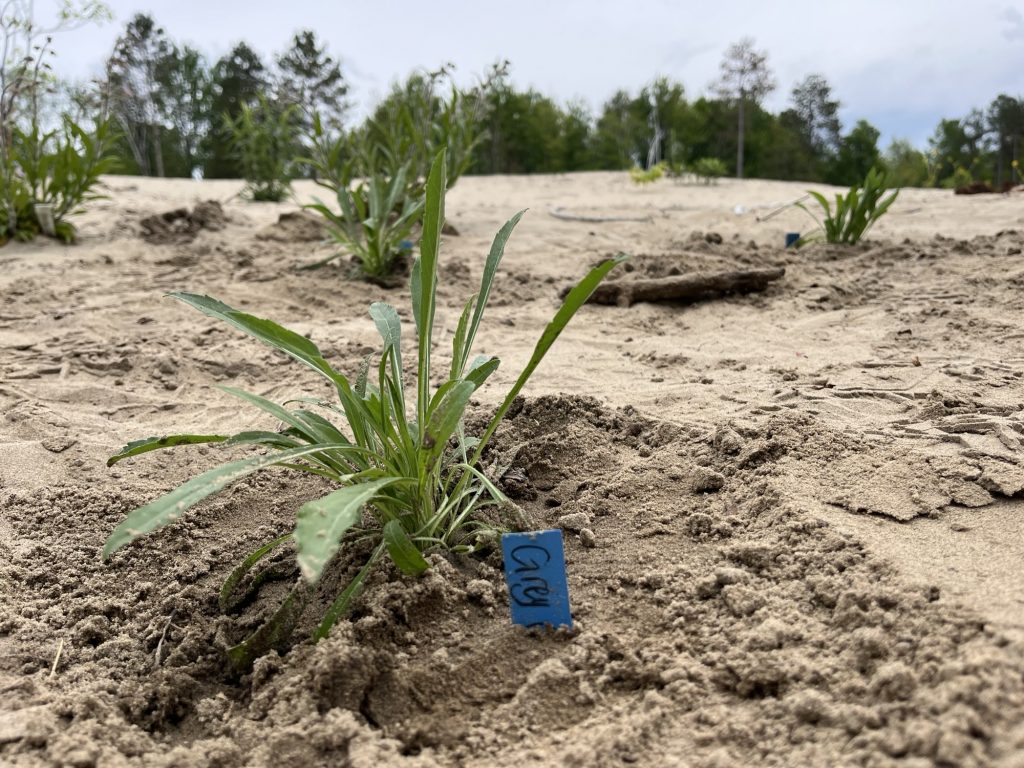
New plants: We have been putting in new plants along the edge of Dune #2 to help pollinators while keeping the main parts of the dune clear for beetles and other sand-loving insects. The new plants included Bolleset (Eupatorium perfoliatum), Sundial Lupin (Lupinus perennis), Butterfly Milkweed (Asclepias tuberosa), New Jersey Tea (Ceanothus americanus), hop trees (Ptelea trifoliata), Heather Asters (Symphyotrichum ericoides), Grey Goldenrod (Solidago nemoralis), and Cylindrical Blazing Stars (Liatris cylindracea). We have been planting them in clumps to mimic natural growth and numbering each plant so we can monitor their survival rate.
New rain collection system: Guttering and a new rain barrel on the Dunes #2 shipping container will give Pinhey Sand Dunes (PSD) greater self sufficiency and easier access to water for our pollinator plants during the heat of the summer.
Student employees start work: Four 2026 summer employees have been tasked with dune maintenance, including clearing the thorny, mildly toxic and invasive buckthorn at Dune #1 which requires special attention, and putting up a new chain around Dune #2. They are also experimenting with watering strategies on hop trees and leading communications activities with visiting school groups.
Beetle Weekend July 17-19: Stay tuned for Beetle Weekend at the dunes. Ghost Tiger Beetles (Cicindela lepida) are a vulnerable species but many are living at PSD, having adapted to the peculiar hot-and-cold climate of our unique internal sand dunes. We will be conducting tours of the dunes.
Repairing our Bee Hotel
By Karen Lane
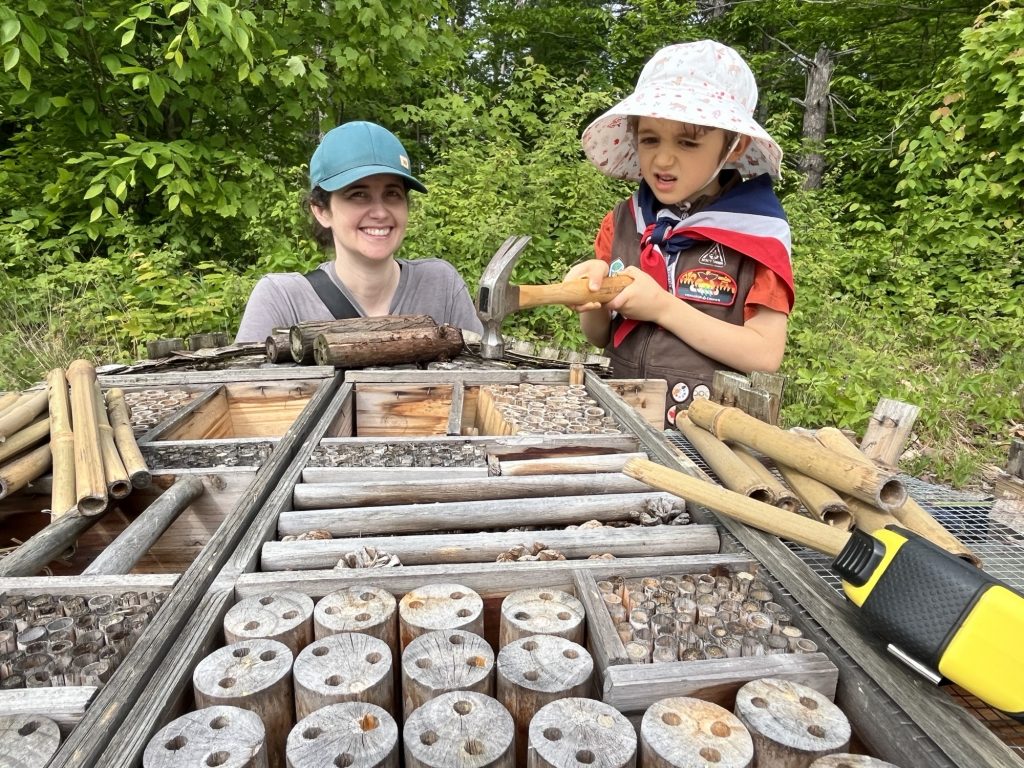
Beaver scout, Tycho Fraser, aged 6, was at the dunes in June working under adult supervision, to restore the bee hotel at the dunes. The structure of bamboo tubes, hollowed wood, cones and other materials provides a space for solitary bees and wasps to nest. Hydro One and the Ottawa Stewardship Council provided the original hanging frame in 2019 but we have shifted it from Dune #4 to close to the entrance to Dune #2 near to the Butterfly and Pollinator Sanctuary.
“Bees pollinate flowers, that’s very cool,” Tycho said. His work will count as the service project for the North Star award, the highest badge awarded in beaver scouts.
Scouts or others seeking service, environmental or other projects should contact Friends of Pinhey Sand Dunes Vice-Chair, Frank Moore at frankmoore@biodiversityconservancy.org
Building Your Own Bee Hotel
By Berit Erickson
About 30% of native bee species nest in cavities that are readily found in nature, like holes in trees, plant stems, and crevices under bark or rocks. Bee hotels provide artificial options for nest sites. They’re useful for education and research because you can observe nesting activity and completed nests up close.
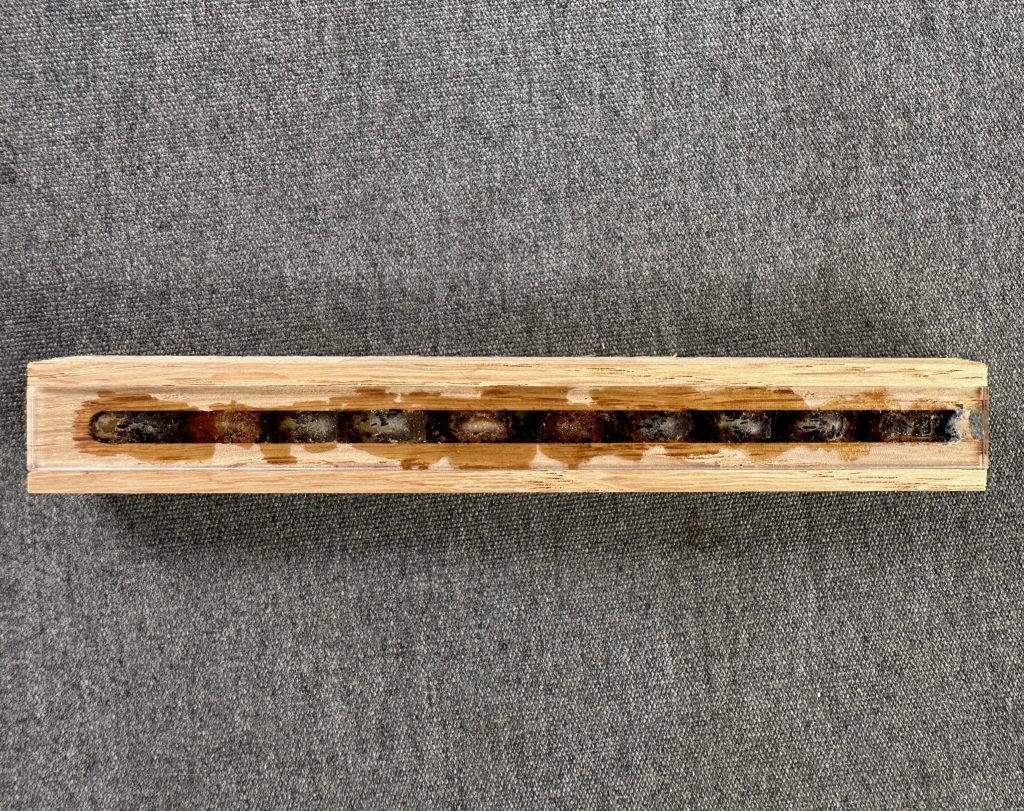
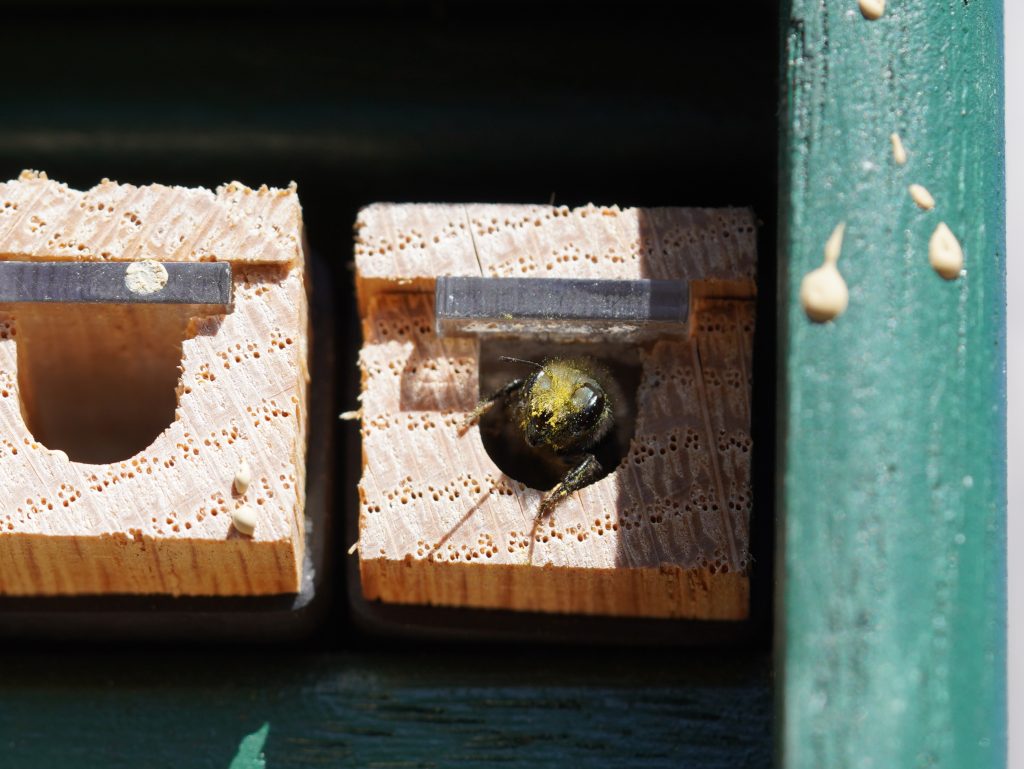
Making or buying bee hotels is generally not recommended because they’re often poorly made allowing predators, parasites and diseases to quickly destroy many nests. However, if they’re well designed, and you commit to cleaning them every year or two, they can be fascinating additions to your garden.
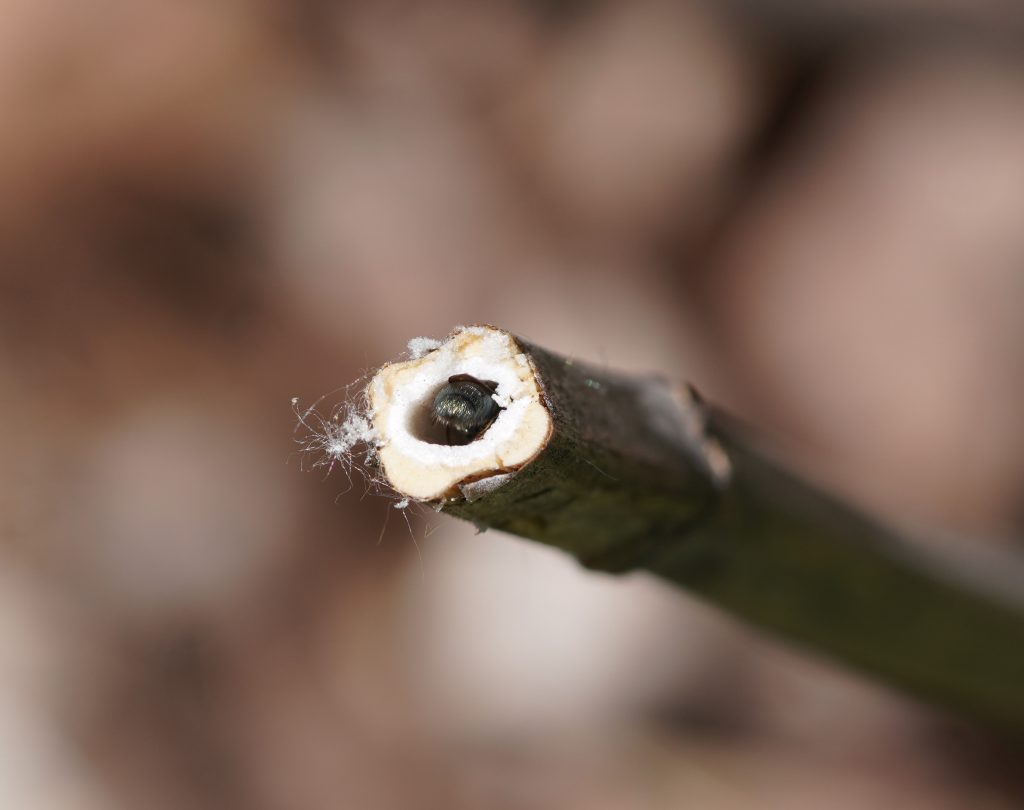
For example, you can make nest blocks by drilling 1/4-inch or 3/8-inch holes in a 6-inch long piece of 2×4 or 4×4. You can also use bundles of hollow or pithy stems. When we cut back plants at the Dune #2 this past spring, we left thick stems a foot tall for cavity-nesting bees to use as nest sites.
For more detailed information, see Ottawa’s Wild Pollinator Partners (WPP):
- Bee boxes: practical tips and local experience
- Bee Condo Maintenance Guidelines
- And biologist Colin Purrington’s blog post, Horrors of mass-produced bee houses
Some species that may use bee hotels include mason bees, leafcutter bees, and Grass-carrying wasps.
To learn more about cavity nesting bees, read local bee researcher Lydia Wong’s WPP blog posts:
Bees at Dune #2
By Berit Erickson
As we add more native plants to Dune #2, we’re seeing more pollinators including bees. They’re visiting flowers to drink the nectar they need for energy and to collect pollen for their nests.
In late April, we typically see hundreds of cellophane bees hovering and zipping around their ground nests on the dune slopes facing the forest. They fly to Red Maple and Pussy Willow trees where they forage for food, and to coniferous trees to collect resins to line their nests.
Later in spring, bumblebee Queens visit blueberry flowers before starting their nest colonies. They also frequent flowers on surrounding trees and shrubs, and flowers on the forest floor.
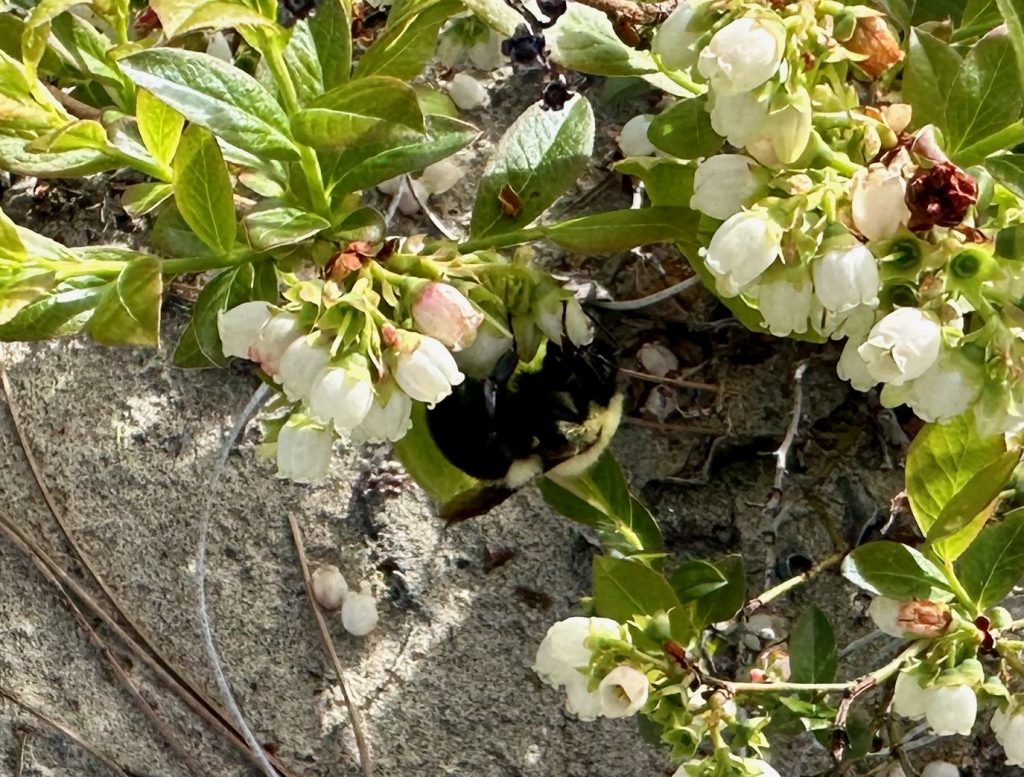
In the summer, abundant blooms around Dune #2 attract numerous bee species, as well as flower flies, wasps, and other insects.
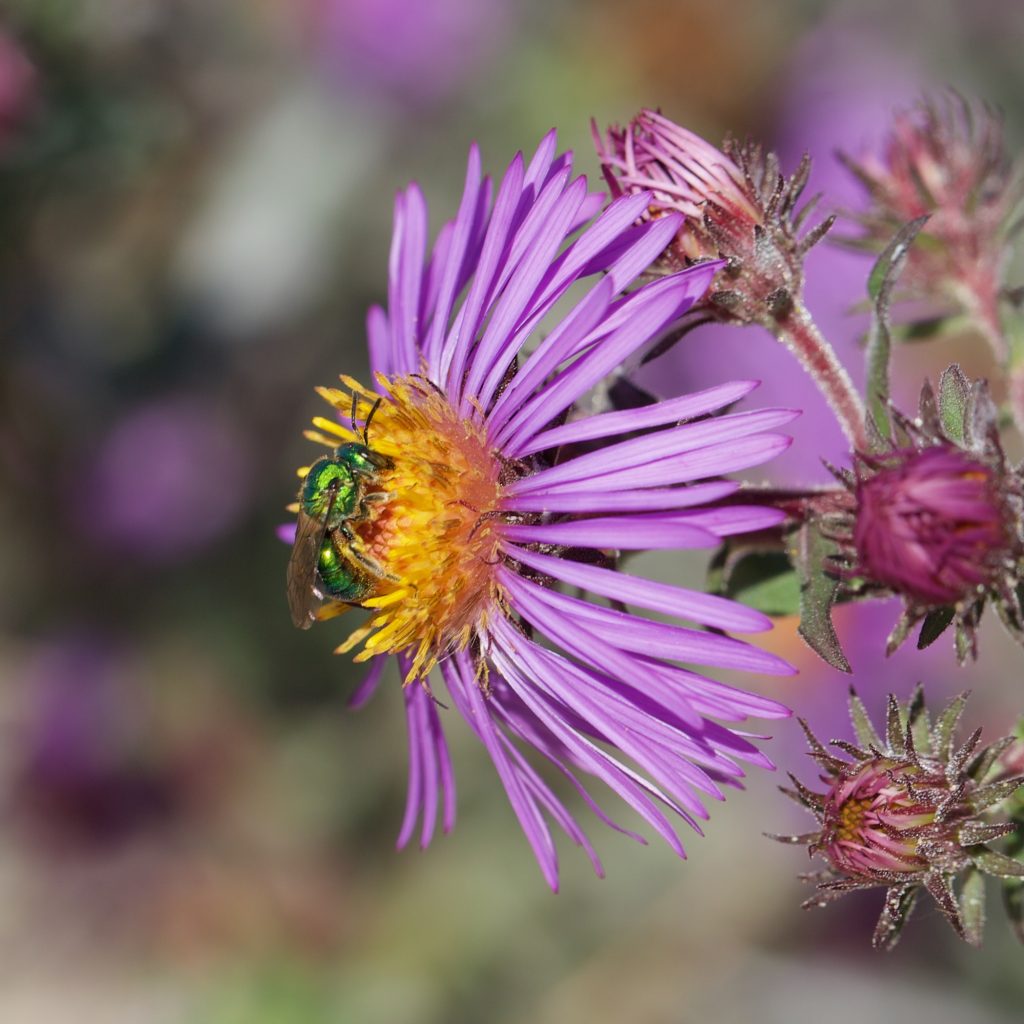
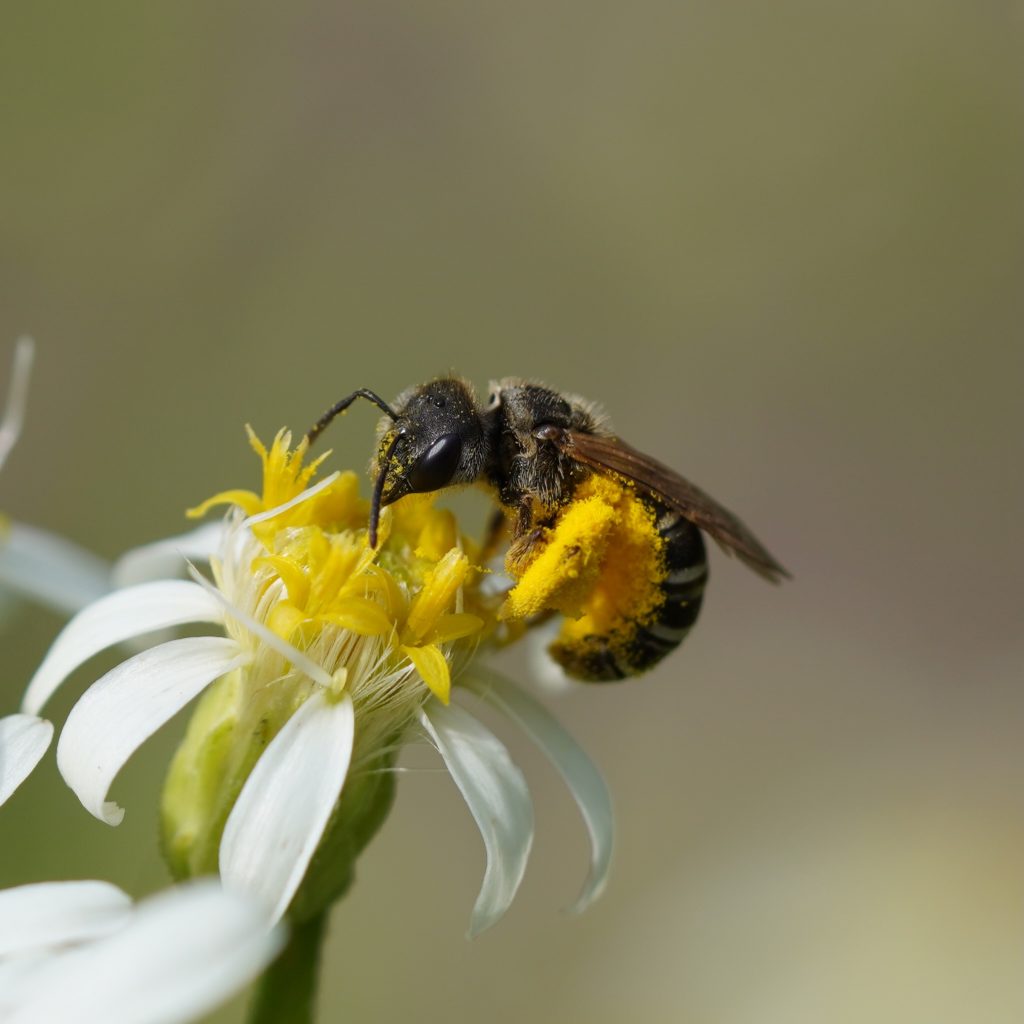
To learn more about native bees, and to find clues for identifying them approximately, see:
A Busy Butterfly Weekend
By Karen Lane

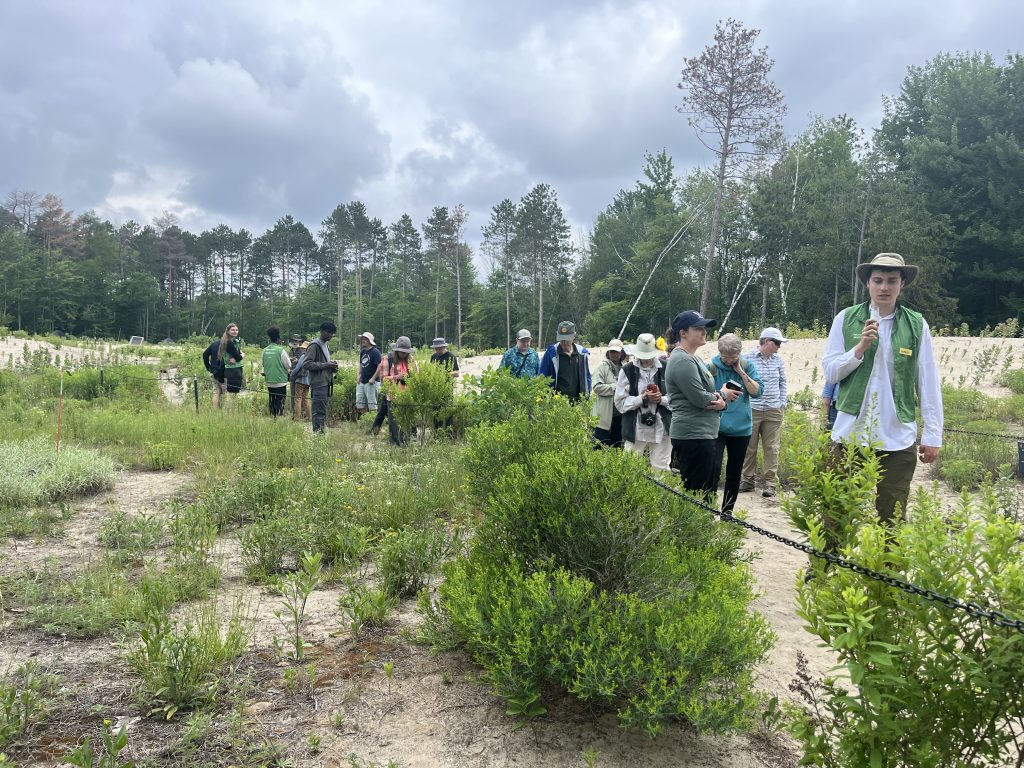
Butterfly Weekend kicked off on Friday June 26, with a great turnout on each day. An National Capital Commission (NCC) representative visited to help unveil the new Dunes #2 shipping container mural and participated in a presentation and tour of the butterfly and pollinator sanctuary. Tours of the sanctuary also took place on June 27 and June 28. Our summer students explained the major butterflies seen at the dunes – the Monarch, the Eastern Giant Swallowtail, and the White Admiral – and the various plants that are hosts or nectar for the butterflies. Other visitors toured the dunes on June 27 and 28.