
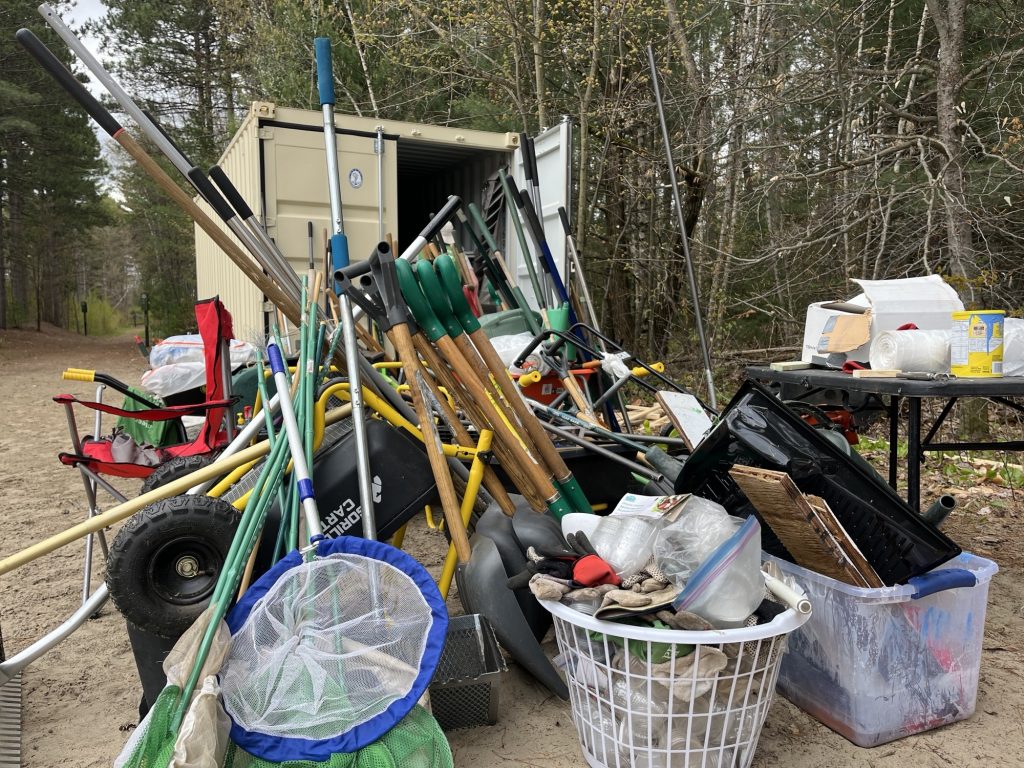
This newsletter includes
- Dunes work restarts with new greeters and photography coordinator
- The Dunes feature on CTV
- Join us for Butterfly Day on June 26, 10am
- Butterflies to spot in May and June
- Upcoming activities at Dune #1
- Bamboo planting in Vietnam
2026 Work Season Kicks Off at the Dunes
We formally started the 2026 work season on May 10 with visitors welcomed by two new greeters – Ali Zbinden and Suzanne Plante. Every Sunday from 0930 to 1230, Ali and Suzanne will help volunteers sign in and direct them to the work streams, either looking after plants or helping to refine the dunes. They will also provide information to casual visitors.
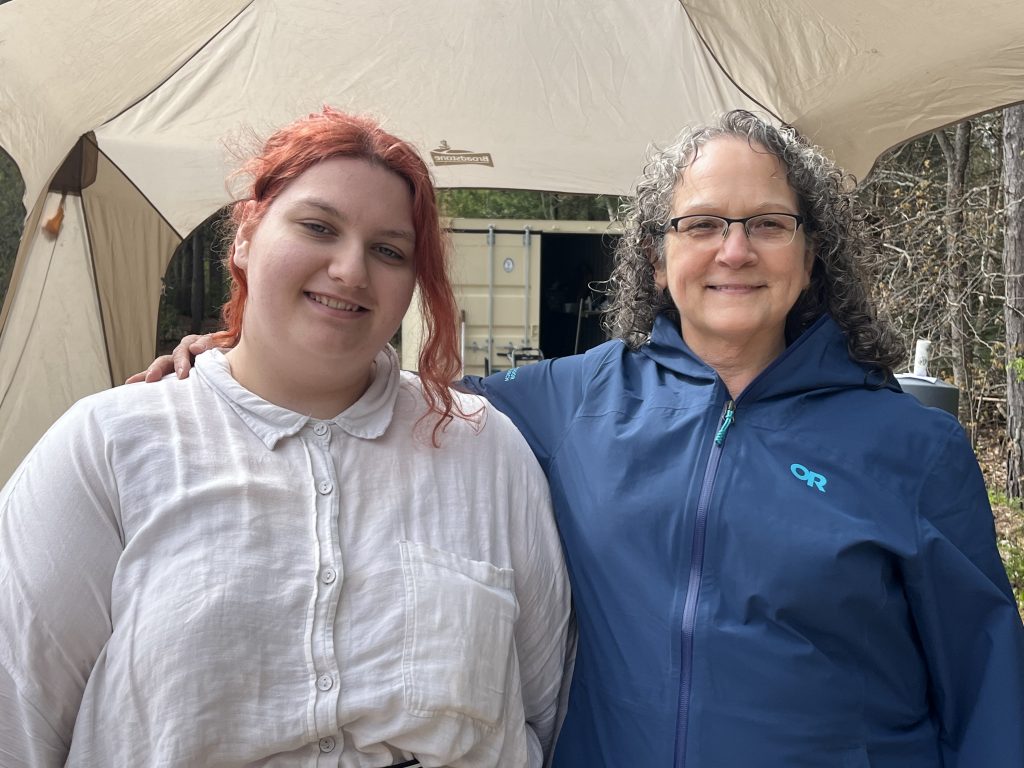
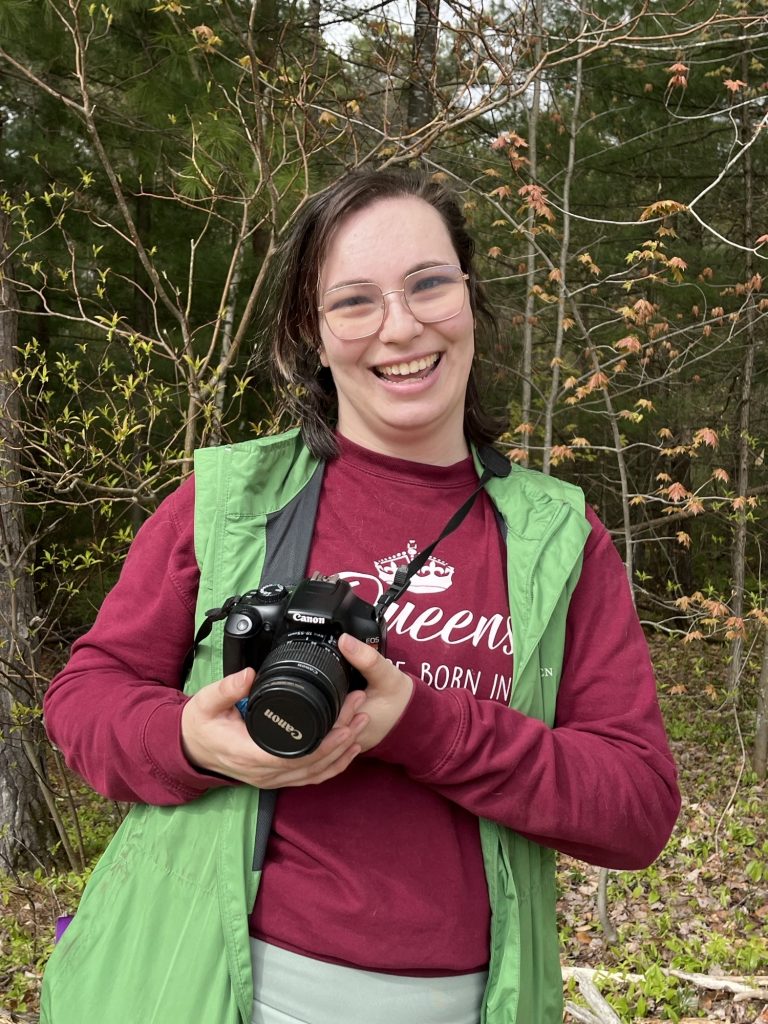
We also have a new photographer and photography coordinator, Brigid Kane-Denis, who will be recording developments.
Visitors to the dunes in May included a Janes Walk with over 60 participants led by BCI founder Pete Dang, the Ottawa Field Naturalists Club who pitched in to help on pruning, seed sorting and more, and a number of school trips with students learning about the unique dune history.
Over the course of the month, at Dune #1, volunteers have been raking up organic matter and pulling up thistles and black locust tree (Robina pseudoacacia). The latter, while having pretty white blossoms, has tenacious roots and spreads quickly if not removed early.
At Dune #2, volunteers have also been clearing organic matter, notably by clearing off the dead bee balm (Monarda) heads, to prevent build up in planting areas. Thicker stems of goldenrods and asters have been cut a foot from the ground. These stems can then be used by some cavity-nesting bees. We are already seeing Dunning miner bees (Andrena dunningi) and other smaller bees, tiger beetles (Cicindelidae family), and ladybugs. A fresh batch of plants will be coming soon for planting in the butterfly garden
Pinhey Sand Dunes Features on CTV: CTV earlier this month spoke with Friends of Pinhey Sand Dunes Vice-Chair, Frank Moore, and ran a video and story that mentions PSD as a key conservation area and reminded viewers of good hiking practices such as respecting pet regulations and preventing the spread of invasive species.
Come to Butterfly Day at the Dunes on June 26, 10am: Help us to get ready and then bring friends and family to the dunes for educational activities, displays and, hopefully, live butterflies. We will also be launching the new mural on the side of the new shipping container.
Butterflies to Spot in May and June
By Ethan Lane-Day
We are already starting to see butterfly action at the dunes. Here are what we’re seeing:
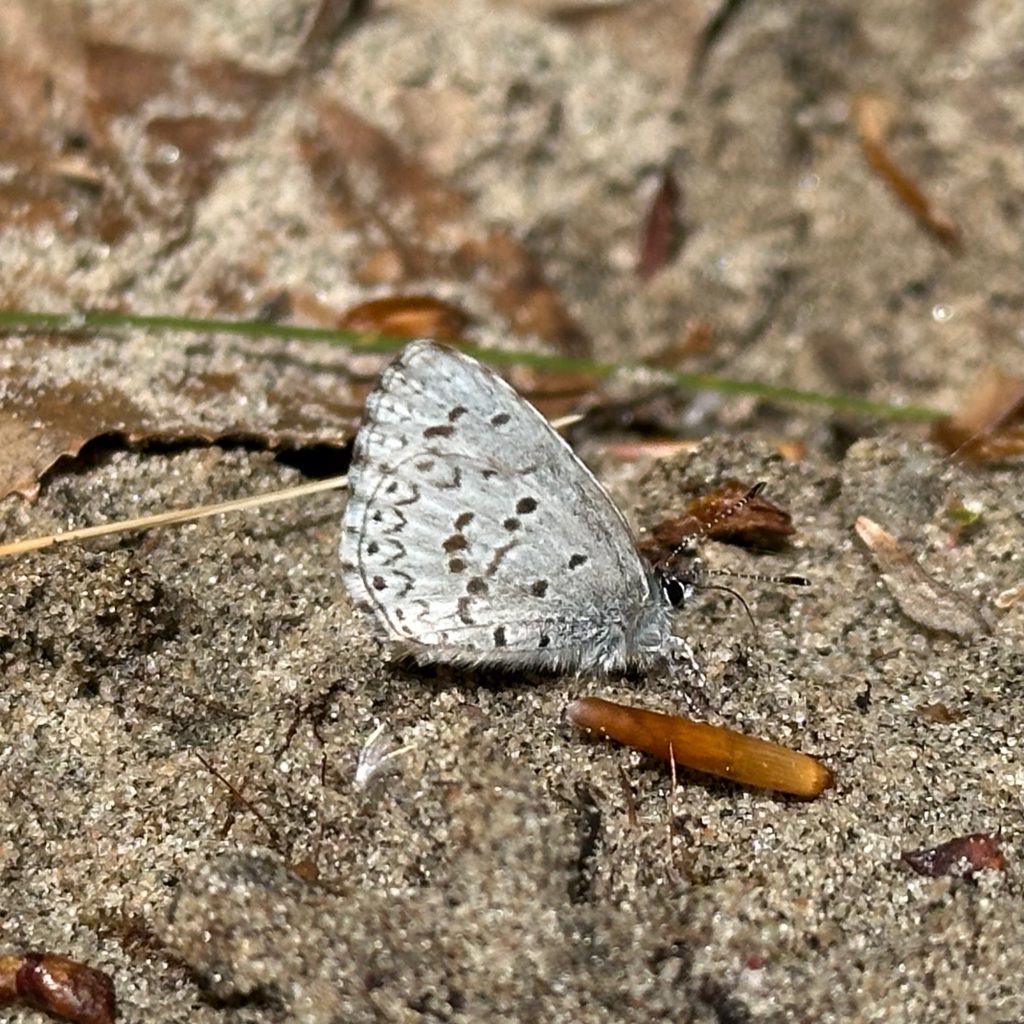
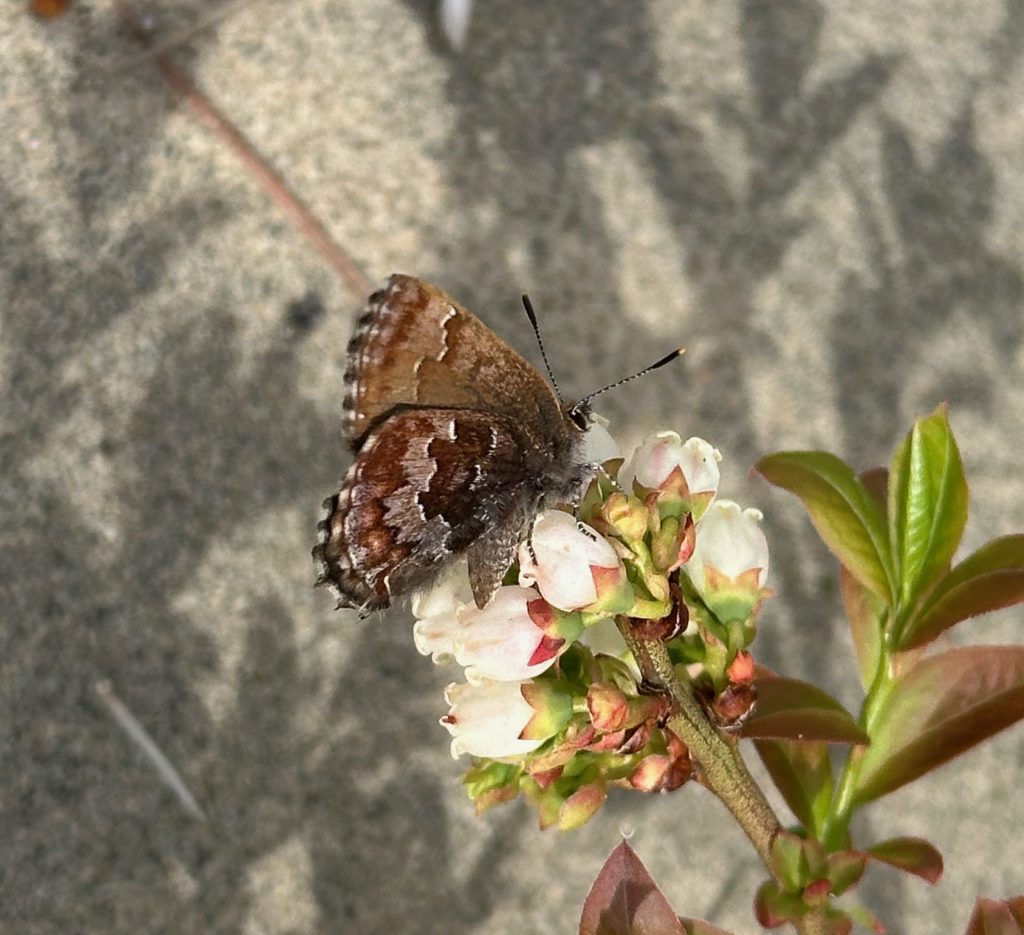
Spring Azure butterfly: The Spring Azure butterfly (Celastrina ladon) is small with a wingspan between 22–35 millimetres and is recognized by its metallic blue inner wings, which can have a black margin in females. They have been spotted flitting around the forest edge. The larvae eat the flowers/buds of cherries, blueberries and viburnums.
Pine Elfin and other elfin butterflies: The tiny Eastern Pine Elfins (Callophrys niphon) often blend in with the dunes due to their brown and rust hues. You will most likely see the Eastern Pine Elfins using the white pines in the forest as a host plant.
Mourning Cloak (Nymphalis antiopa). Dark winged – maroon or purple brown – with a line of blue dots and a pale yellow edges to its wings. Mourning Cloaks overwinter as adult butterflies, hidden beneath bark, logs, or rocks. They’re fairly common after the snow melts.
Eastern Giant Swallowtail: The Eastern Giant Swallowtail (Papilio cresphontes), have near-black wings with yellow stripes on their inner wings. They use the hop trees at Dune #2 as their host plant.
In the fall at Pinhey Sand Dunes (PSD), chrysalises were collected and overwintered in mesh enclosures to protect them from predation. The butterflies began to emerge from their chrysalises in late May.
Skippers: These are butterflies in the Hesperiidae family, often confused with moths and similar insects with furry bodies. One of the easiest ways to identify Skippers – true to their name – is to watch for their bouncy pattern of flight. The way they hold their wings while resting is also distinctive. The skipper varieties in Ontario are largely brown with speckled patterns along the edges of their wings, such as the Dun Skipper (Euphyes vestris). You can find them visiting flowers in search of nectar, or sedges which are their host plants.
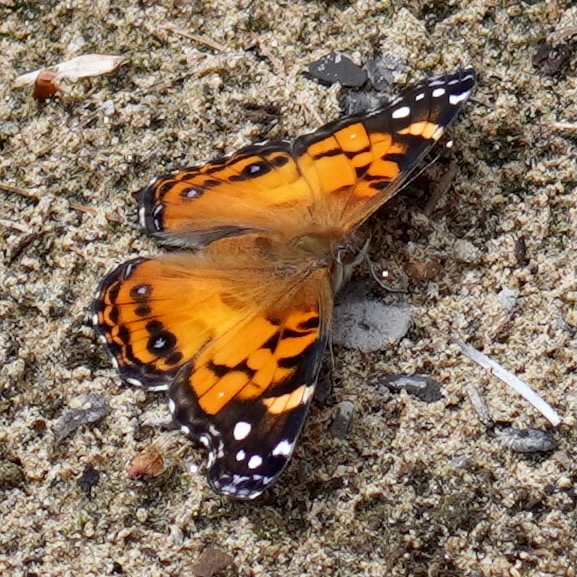
Later in June, watch out for the American Lady, as well as Monarchs laying eggs and drinking nectar from flowers at Dune #2.
Early Tiger Beetles at Dune #2
By Berit Erickson
In mid- to late-May on warmer days, we began seeing early tiger beetles running along the sand surface at Dune #2. Both Festive and Big Sand tiger beetles are active at this time of year.
There are also other signs of tiger beetle activity. If you see circular holes with sand piles on only one side, they’re tiger beetle larvae holes. The sand piles may be darker than the surrounding sand because they’ve been excavating at depths where the sand is more moist than the surface. Keep an eye out for half-circle holes too – entrances to adult tiger beetle dens.
Upcoming Ativities at Pinhey Dune #1
By Chris Dragan
Our overall strategy for the Dune #1 site is to set priorities based on what is doable within a year, specifically considering how much manpower is needed for each project, and what tools are needed. Every week, we log how many volunteers are needed, the progress, and lessons learned. This helps us better predict what can be done in a year.
In particular, we intend to create not just butterfly habitats, but habitats for insects, such as damsel flies (Zygoptera), robberflies (Asilidae) and dragonflies (Anisoptera) which mature in the sand dune. The best way to achieve this is to make the site self sustaining as close to its original natural state as possible. We can achieve this in two ways.
Firstly, on the North side of the Dune, we will start growing hop trees (Ptelea trifoliata), trembling aspen (Populus tremuloides) and black locust (Robinia pseudoacacia), which take time to grow and are therefore easier to manage. We’re cautious about greening Dune 1 because it would take a lot of hard work to prevent overgrowth. We are also taking out other, unwanted tree roots, but this will be a project for following years.
Secondly, as soon as possible, we need to finish clearing away the mounds of wood chip debris left over from the recent clean up after the 2022 Derecho. This is almost done. We will use flattening, sifting, and other sand-cleaning tools to clear out this organic debris as well as glass and other rubbish from the 1980s when people held parties at what was then known as the “Sand Pit”.
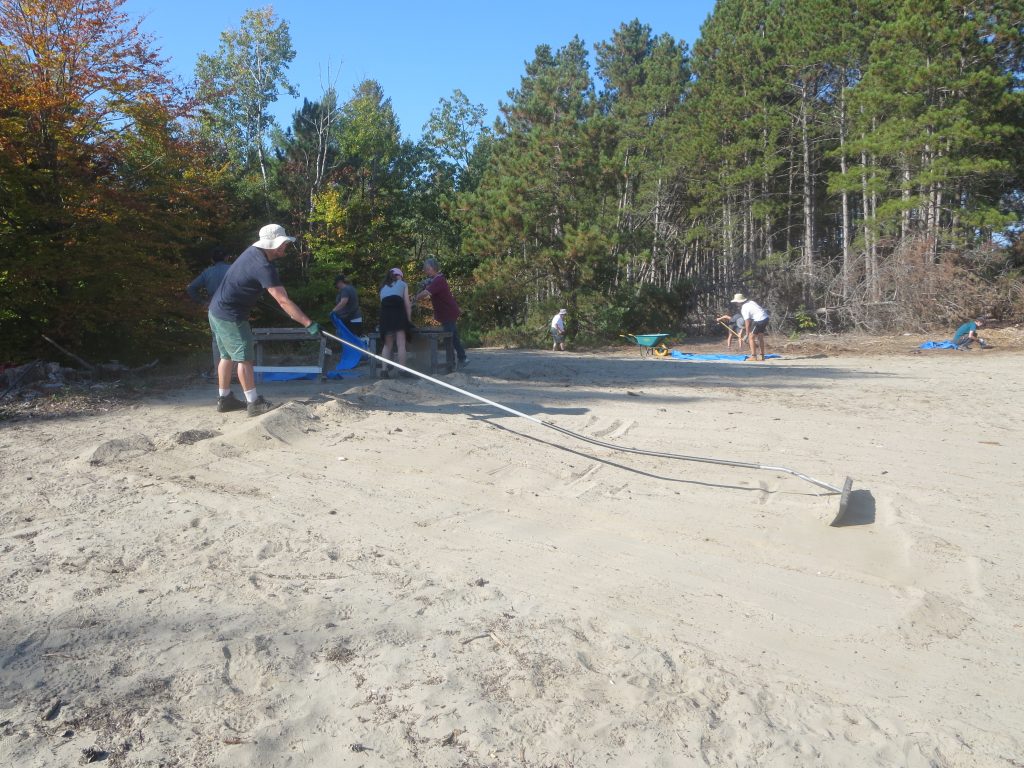
Once this work is done, dune winds will blow things away on its own and we will no longer need to allocate as many volunteers towards this maintenance and we can start working on other restoration projects. We only really need two people at the Dune full-time.
We are also working on putting up more signs and other means to stop people from walking across the dunes. We hope to set up a new roped-off area, but this will require National Capital Commission funding. Some border poles are currently bent, so they will also need to be straightened before they can be reused.
Although all are welcome at Dune #1, we need a balance of the kinds of visitors we get. We want foot traffic to inspire people to become volunteers, to protect the site from bad actors, and to help us handle larger activities going forwards.
This includes making the Pinhey Sand Dunes into an outdoor education facility for the public. We want to keep it interactive by leaving plants and signage along the edges of Dune #1 to keep people of all ages engaged along the trails. We host class field trips at the Pinhey Sand Dunes from time to time and, although we specialize in kindergarten class visits, we’d also welcome students of all ages. When all is said and done, our goal is to provide kids – and others – with a love for bugs of all kinds so that the Pinhey Sand Dunes can continue to be taken care of in the years to come.
Bamboo Planting in Hue, Vietnam
By Karen Lane
Biodiversity Conservancy International (BCI), the umbrella organization for Friends of the Pinhey Sand Dunes, has signed an agreement with the government of Hue, in central Vietnam to plant 1,000 bamboo trees between now and end 2028. This is part of BCI’s effort to promote sustainable native plants in Vietnam, the birth country of BCI founder Pete Dang.
The first 200 plants should arrive in Hue in July or August, with planting set for around October. BCI and the government are also working with nearby villages to find and propagate native forest trees.