
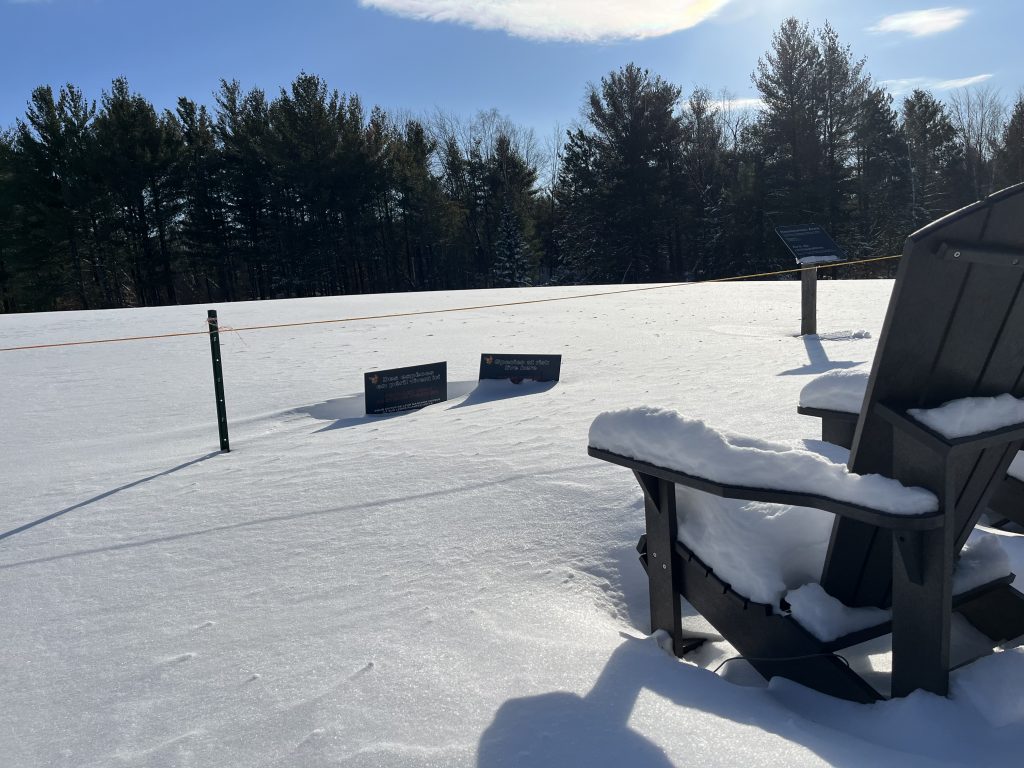
Winter continues to blanket Ottawa and our Pinhey Sand Dunes in pristine white, keeping us all indoors and warming ourselves. So, what better time to look forward and think beautiful and positive thoughts about coming months?
In a bid to protect the pollinators at the dunes, we put the netting covering butterfly pupa into the forest to overwinter. Our newsletter tells you about what part of the butterfly cycle they are at and what you can expect next from our swallowtails. And under the snow, the flora are also gathering strength for a spring-summer growth spurt, so read some uplifting poetry about one of our most common flowers.
This newsletter includes:
- The life cycle of the Giant Swallowtail butterfly
- A Poem Dedicated to Common Milkweed
The life cycle of the Giant Swallowtail butterfly
By Ethan Lane-Day
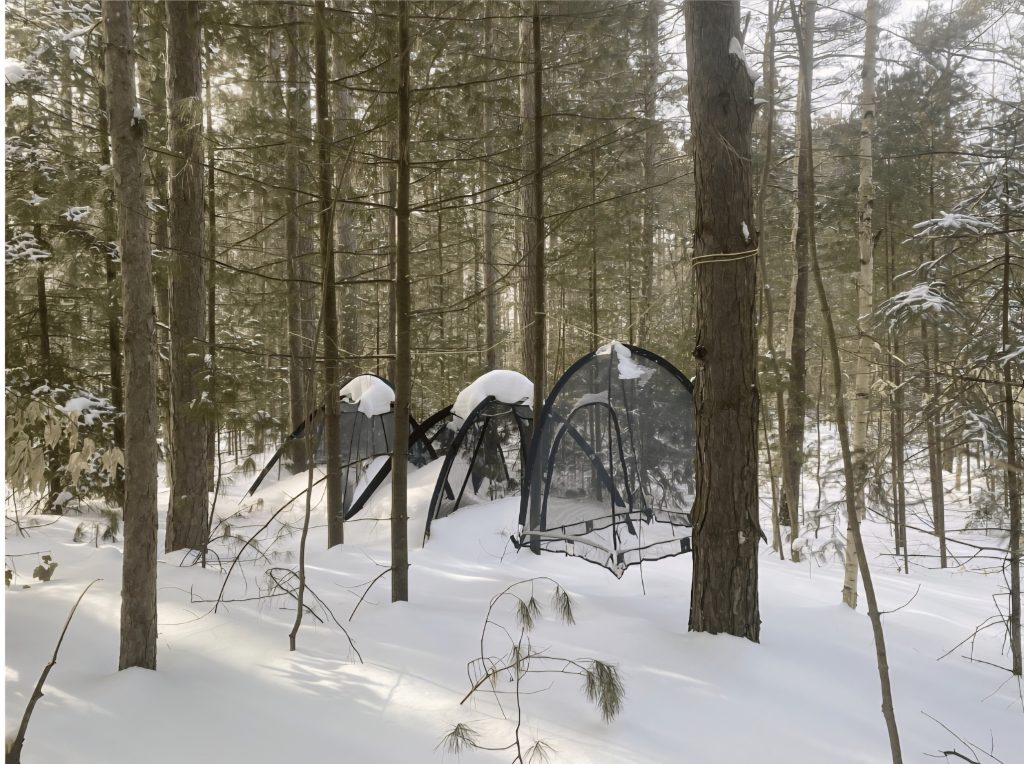
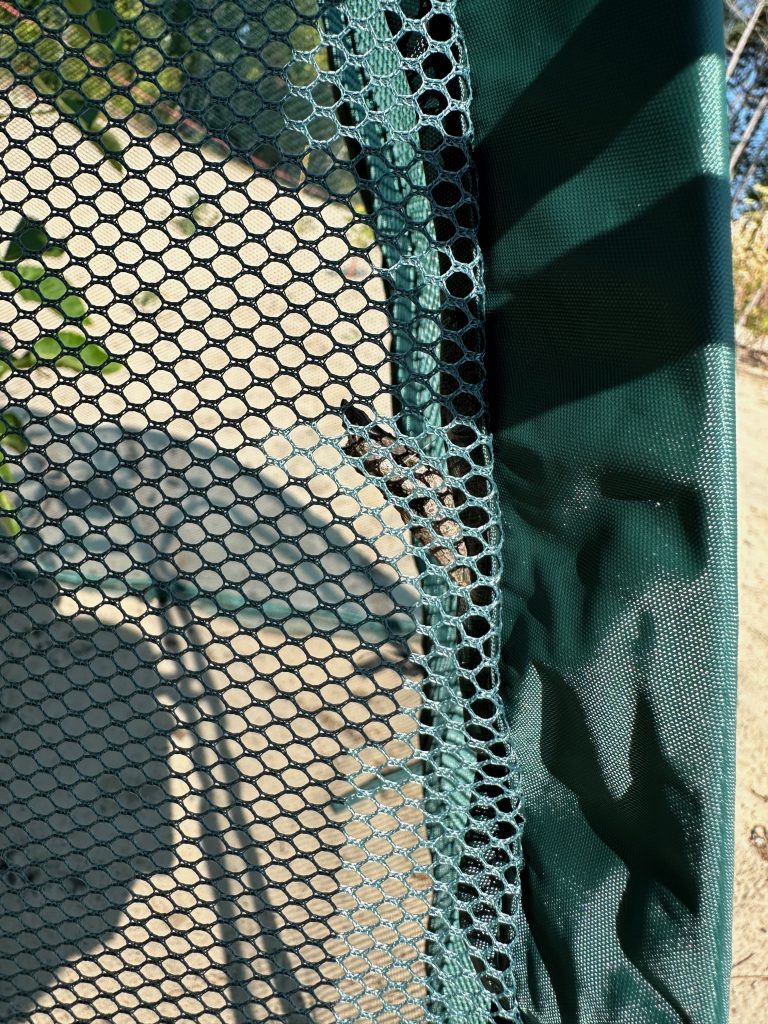
Just before the temperatures plummeted at the Pinhey Sand Dunes, we moved the net tents containing pupae or chrysalises of the Giant Swallowtail butterflies (Papilio cresphontes) into the Dune #2 forest near the shipping container so these future pollinators can hunker down over winter.
Butterflies belong to a group of insects that have a complete metamorphosis life cycle. That is, after hatching from the egg, the larva (or caterpillar) will grow and molt into a series of development stages, known as larval instars. The last instar will molt and transform into a pupa (or chrysalis) with a completely different body structure and the pupa will grow and transform into an adult butterfly, again with a completely different final body form.
Eggs
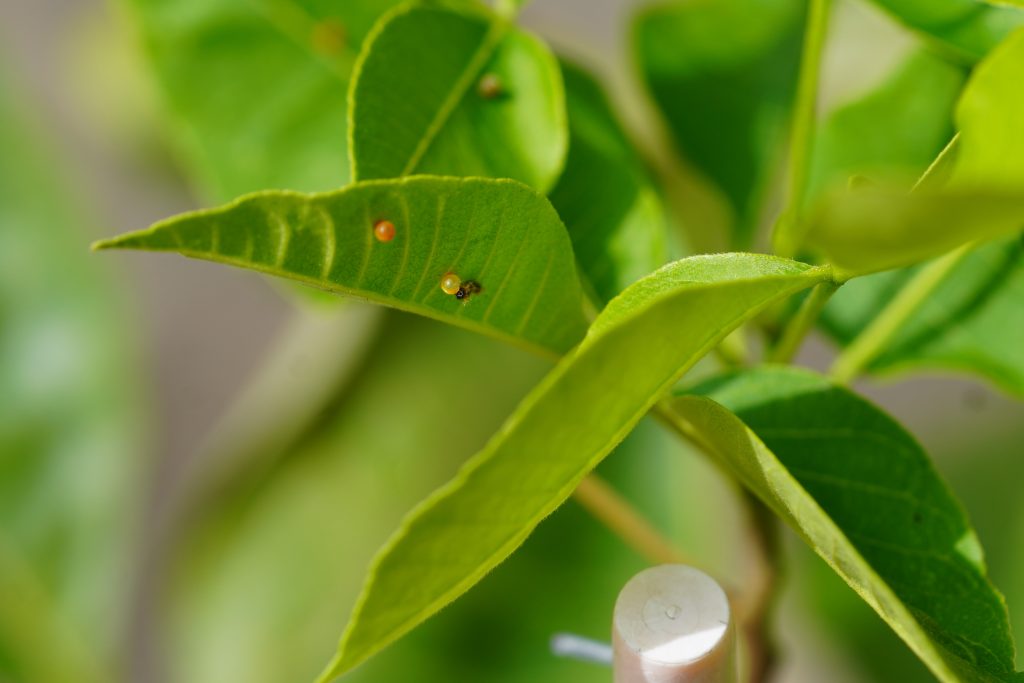
Giant Swallowtails lay their eggs on citrus trees like oranges or lemon, or on the hop trees – a species in the citrus family – which we have planted in the Pinhey Sand Dunes for exactly this reason. Their eggs are like small pearls laid singularly on the host plant but brown with orange tints.
Larva
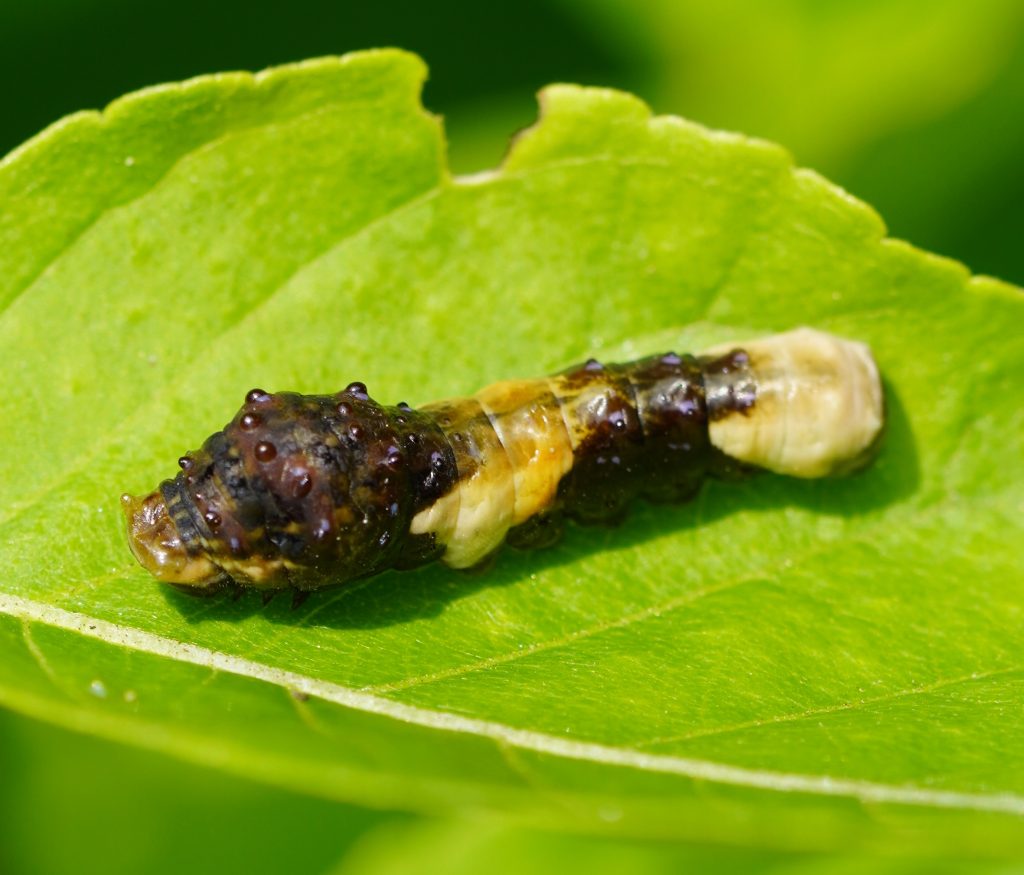
Once hatched, Giant Swallowtail caterpillars enter the larval stage, where the majority of growth occurs. The larval stage can last several weeks, depending on temperature and food availability.
Swallowtail larvae closely mimic bird droppings early on, while in later stages they become strikingly patterned with brown, white, and cream.
Like other species, they have a unique defensive organ called an osmeterium, a bright orange, forked gland that emerges when the caterpillar feels threatened and emits a strong odor to ward off predators. However, this defense mechanism is largely a bluff meant to imitate the tongue of a snake and only effective against small invertebrate predators.
Pupa
After completing their larval growth, the caterpillars form a chrysalis and enter the pupal stage. This is the stage currently occurring with the chrysalis anchored with silk inside the net tents. The pupa is typically brown. In these cocoons they attempt to blend with surrounding twigs and stems. In colder climates, Giant Swallowtails can overwinter in this stage, remaining dormant for several months. However, climate change and shifting ecosystems have put some butterfly species at risk during these stages.
During this time, dramatic internal changes take place as the caterpillar’s body is transformed into a chrysalis and its adult form. Though the pupa appears still, it is one of the most transformative stages of the butterfly’s life cycle. When temperatures rise in spring, development resumes and the adult butterfly prepares to emerge.
Adult
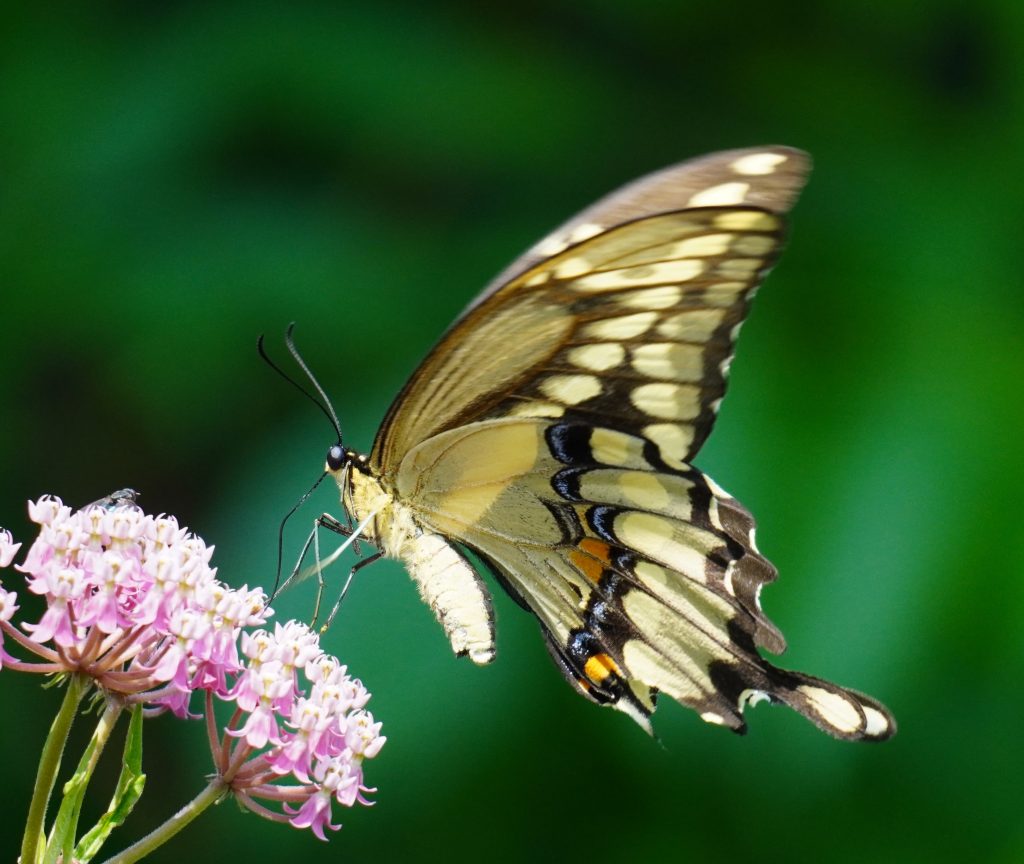
The adult stage is the most recognizable phase of the swallowtail life cycle. The Giant Swallowtail, Canada’s largest butterfly, has largely black wings with yellow stripes, averaging about 5 cm or 2 inches each.
A Poem Dedicated to Common Milkweed
By Kate-Lynn McGowan
Broad leaves
pointed opposite
one another,
and mauve petals
with white tips,
like little suns
unfurling gently
to touch the world
in all its grief
and sorrow,
all its majesty
and glory.
Buzzing insects
hover excitedly,
sometimes resting
on a stem or
a thick leaf,
drinking up nectar
in great thirst
and delight
from star-shaped
flowers, gifting life
and nourishment
in a dazzling display.